

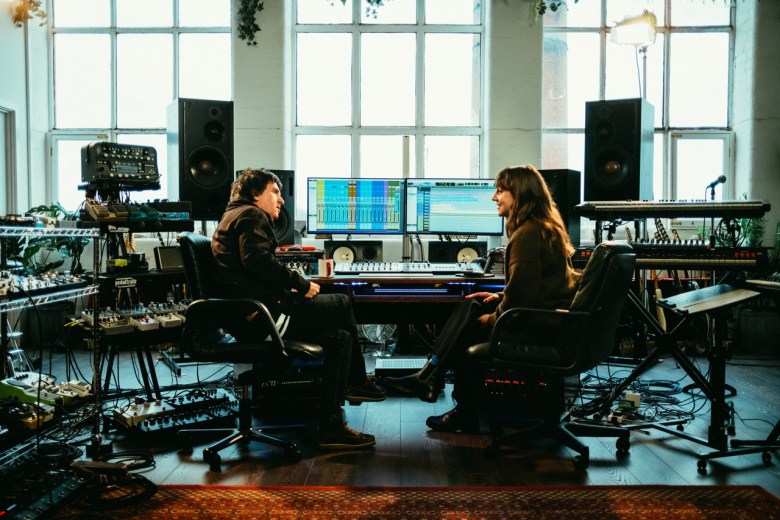
It’s perhaps a little frustrating being Johnny Marr: despite being widely recognised as one of the greatest British songwriters, the legacy of his earliest work as guitarist and songwriter in The Smiths looms large over everything he has done since – all the more remarkable considering the indie icons were only active for four, hyper-productive years.
The quality and impact of The Smiths’ catalogue is of course not in doubt: but Marr is much more than that – restlessly seeking new experiences ever since. His career has seen him work with The Pretenders, Pet Shop Boys, Talking Heads, and Bryan Ferry, and has latterly created soundtrack music in collaboration with Hans Zimmer for blockbuster movies including Inception.
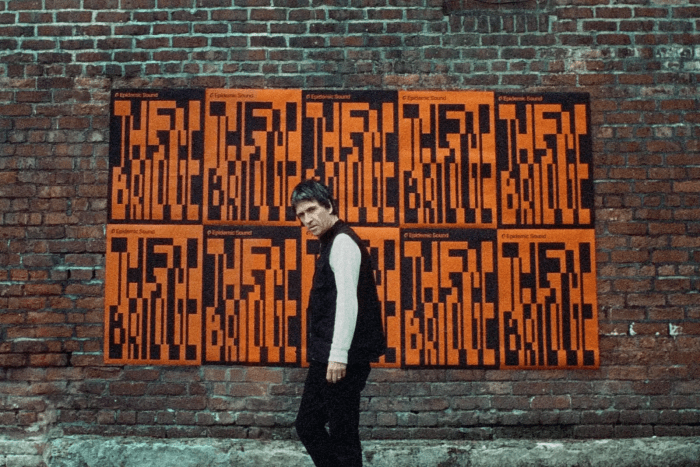
With this breadth of experience, Marr is then perhaps an ideal mentor for young artists – and now he’s doing exactly that. In partnership with Epidemic Sound’s collaboration program, The Bridge, Marr is mentoring three emerging songwriters during 2025 – guitarist Rebecca Mardal, multi-instrumentalist Christoffer Moe Ditlevsen, and the cross-genre artist Kylie Dailey.
He kicked the year of mentorship off with a group session this week, and we chatted to Marr afterwards about his experiences from the day, his thoughts on the pressures on aspiring artists, the struggling grassroots live scene, and more.
Meet Marr the mentor
Marr says he was partly drawn to the mentorship to get out of his own comfort zone. “Epidemic Sound and myself decided a while ago that it would be a good thing for me to try and not just be involved with indie guitar music. Kylie and Christopher and Rebecca are all super-nice, very dedicated, hardworking musicians who intend on making a life out of their work. So fundamentally, we’ve got a lot in common.”
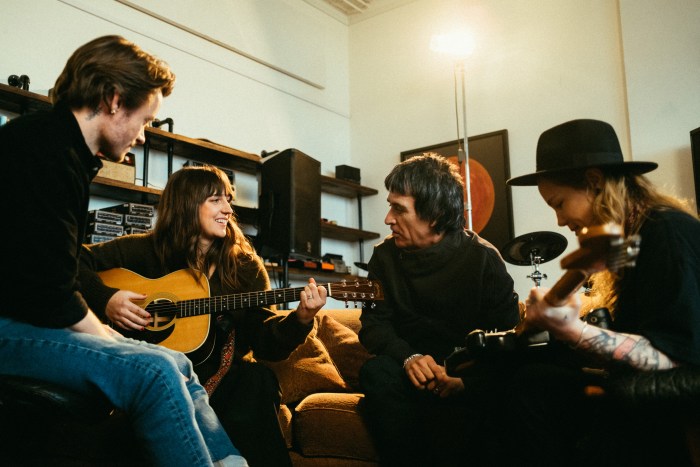
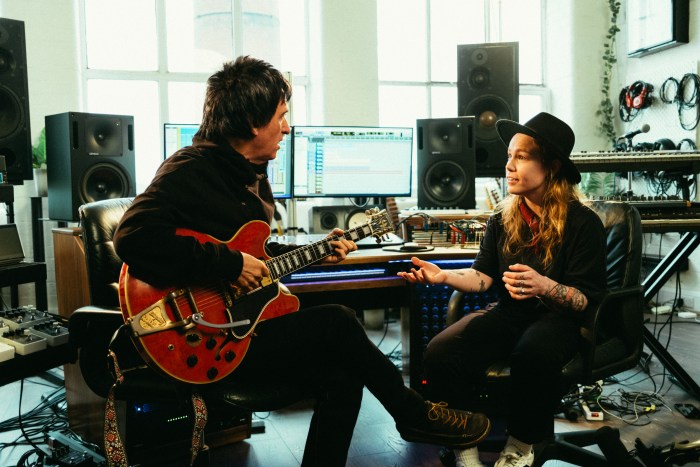
On the mentorship day itself, each of the musicians had a unique dialogue with him, Marr explains, “sometimes about the technical aspects of the work, and then of their work, and my work, and process.”
And it was a two-way learning experience: when he listened to one of Christopher’s pieces, Marr found himself asking how it was created: “I wanted to know whether what we heard was his outpouring of composition in real time, or whether he had written a whole load of music and recorded it, and then edited it and moved sections around.” It turned out it was the former approach, which Marr found impressive: “not all composers write that way,” he notes, himself included.
He found that he chatted to other mentees about working life as a musician: “To me, it’s just my life, but when you share them with other people, it hopefully was informative for them. Some of the things that I can talk to Rebecca about, I learned before I even had my very first record deal.”
Musicians are naturally inclined to advise and help each other, he says. “With Kylie, there was a couple of influences [in her music] that I detected very subtly. We listened to her songs, and we had a very natural understanding.” The group “all clicked straight away, which surprised me,” he says – “but it was a really nice thing.”
Ultimately, Marr found that he was also inspired from the day: “I’ve worked so many different musicians over the years, so I do feel like I’ve learned a lot, but you’re always learning. It’s that cliche, isn’t it: you’ve always got to be a student.”
Despite closing venues, live music prevails
What’s it like to be an emerging artist in 2025 – how is that different to when he was starting out in his career? The pressures today are across the board, he says, and it affects the fundamentals of how music is made and performed. “Partly one of the reasons why there are so many singer-songwriters is because they can’t afford to get a band together.”
What about the sad demise of the local venues in the UK – that have traditionally provided emerging artists with a first stage on which to perform, much like Marr once did, and are a valuable talent pipeline?
“Unfortunately, this is where I started getting very serious, because I think it’s a result of a much bigger problem, which is unregulated capitalism.” It’s no wonder why small venues can’t sustain themselves, he says. “If everybody wants to buy up the neighbourhood, as developers have, or the venues’ electricity bills are so wildly inflated, then venues are getting a squeeze.”
But, he says, “no one can tell me that people don’t want to go out and see live music. Because at the same time, there’s thousands of people right now in almost every major city in the Western world who will buy a ticket for £200, stand with 20,000 other people, and look at a fucking screen!”
Why does he think people are eager to pay a lot for a one-off stadium experience, but not pay a small amount and take a gamble on new emerging artists’ shows? It’s to do with supply and demand, he says, and if there are enough venues supplying new artists, people will make it part of their lives: “rather than the idea that human beings don’t want to go and see local groups, I generally think that the audiences will ‘get’ what they’ve served up, if you like.”
Marr’s mentor memories
Back to mentorship for a moment: did Marr have anyone who acted as a mentor when he was younger? “I absolutely did,” he says, enthusiastically. “When I was 17. And it was the manager of the clothes shop next door to the one that I worked in. His name was Joe Moss – he wasn’t in the music industry, but he was a huge music fan and had an encyclopaedic knowledge of music. I didn’t have a band at that time, I was sort of working on writing and trying to formulate what would eventually be The Smiths.
“And in 1981, Joe definitely took me under his wing – and he gave me a job in his shop, which didn’t really pay me very much, but it put me, most importantly, in the centre of town and around musicians. And when I did form the Smiths, he gave us a place to rehearse in the shop, and so that’s where we worked half the early songs. He loaned us the money for a van.”
Moss later managed Marr from the 90s until 2015. But his own mentoring has shown him that it’s not just up to individuals to nurture future talent, he says: “it was good for me to see the actual reality of what Epidemic Sound brings to these musicians. They were telling me how good it is to be given the support and the structure – so they can live and create, and actually try and go forward: make that next album in Kylie’s case, or work towards the next sync in Chris and Rebecca’s case.”
“It’s melodic, it’s noisy, it’s aggressive, it’s beautiful”
Despite concerns about the pressure on new artists, Marr is very positive about the new generation of musicians, and their prospects. “You can’t keep those artists down, because the good news is that people are always going to be creative. There will always be very talented people.”
And the attraction of being in a band is something that will never fade, he says – “There’s poetry in it, there’s loud guitars in it, loud guitars and drums in it, there’s girls in it, there’s boys in it, there’s gay people in it, straight people in it, everyone’s in it, everyone can express themselves in it.
“It’s melodic, it’s noisy, it’s aggressive, it’s beautiful, it’s great clothes. There’s drinking, partying and staying up late. There’s working in it, there’s discipline, there’s youth… that’s a dimension of life, it’s not going to be denied.”
That rosy outlook persists despite some familiar questions that have popped up throughout his career. “When I first started working in 1983, one of the first questions I was always asked was, ‘is guitar music dying?’ And then, again, in 1987, when House music was starting out: ‘oh, guitar music is dying.’ And then I was hearing it again in 2000. So now I just say, ‘Listen, you’re asking the wrong person!'”
Enjoy it – and stay obsessed
Does Marr, when he looks back on his varied career, have one piece of advice that he finds himself giving repeatedly to emerging artists? “Yeah, I do. Sometimes I say it differently, but essentially you’ve got to stay obsessed and you’ve got to enjoy it too. That’s something that only an older person can really say with certainty: you really have to enjoy it, because struggling in rehearsal rooms sometimes feels like a challenge. If you’re not enjoying it, it’s not worth it.
“But then the second thing comes in, which is obsession. And the great thing about obsession is that no one can take it away from you. Even if you have to work a day job, you can still be obsessed.” He pauses a moment. “And with obsession, the thing about it is that not only does it make you better at what you do – but it brings joy that no one can take away.”