


Team Talk is Music Ally’s interview series, where our marketing experts speak to music industry teams about their latest work, best practices, and smart strategies. You can find the archive here.
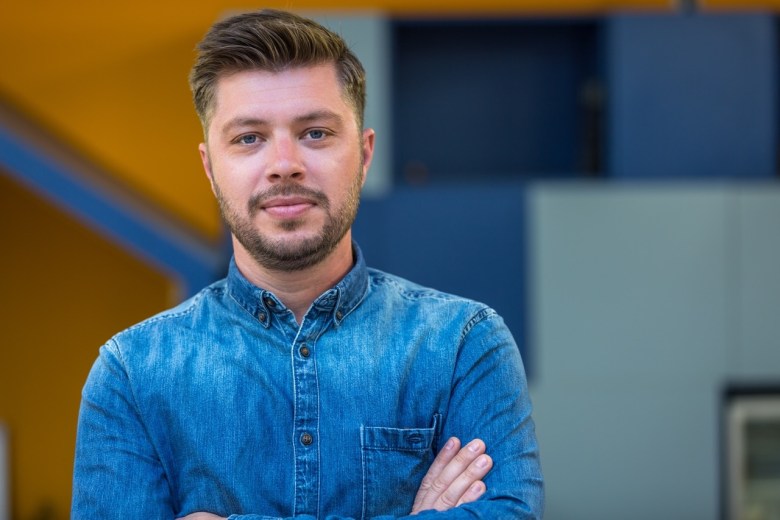
Independent digital distributor and artist / label services company IDOL has been busy in 2024, expanding its team, investing in new services like audience development, and growing internationally. Roo Currier is general manager of its UK office. Here, he chats to Music Ally’s Marlen Hüllbrock about how the business is evolving.
Marlen Hüllbrock: You’ve been at IDOL since 2016. How have you seen the distribution space change in that time?
Roo Currier: I think probably everyone would recognise that there’s been a real increase in the depth and breadth of service now on offer. IDOL have always catered to the more bespoke end of the market but the last 7 years has led to a lot more options in the marketplace.
Part of that widening of service is of course a response to more direct artist deals. That’s a fairly substantial shift over this period, which is something that we’ve responded to.
We’ve had several extremely successful direct artist deals on an International level but that’s definitely something that we’ve done more of in the UK and in the US. Working alongside our more traditional label deals this has become a growth area for us in terms of what we’re signing and the conversations we’re having.
Another development is a reliance on distributors to help finance projects. That happens more and more, which is something that we’re happy to do. That’s a key value-add that a contemporary distributor has.
And it’s more and more competitive, linked to both of those things. You’ve got lots of other people joining this space: more label services companies and majors buying previously-independent distribution services.
If you’re an artist looking for ways to start distributing your music, you’ve got more options now than you had 10 years ago, which can only be a good thing.
MH: You’ve been investing more in your artist and label services. What sort of services are of most value to your clients there?
RC: We already provide a lot of these high-level services to our label clients, so moving into the artist service world, we didn’t have to develop a specific department or create services that we were not doing anyway. It’s felt like a natural progression: offering more of what we’re already doing for our label partners.
Having said that of course we’ve added to the team. We’ve given ourselves additional label-management and DSP partnership resource, as well as added to the Audience Development team. This has been a really key area for us to help our artists and labels with digital marketing expertise. All these services were available before, we’ve just added resource to those areas.
We’ve grown in the time I’ve been at IDOL from 25-30 people to now over 70 internationally. As we’ve signed more labels and done more direct artist deals, all of the team has grown.
MH: What are you doing on the audience development side for your clients?
RC: It really depends. We work for the label, so we don’t work project by project, which I think is a key differentiator with other companies – and certainly if you go to third-party digital marketing companies.
So it can be helping a small, developing label best spend €100, identifying where that money is going to be of most value, through to full International campaigns costing hundreds of thousands of Pounds. It really depends on what the partners’ needs are.
The Audience Development team helped one of our artists set up a Discord server for example. Of course we’re always advising on the latest developments from DSPs, be that Spotify Marquee, Showcase or Countdown Pages or any newly available functions. Up-to-date hashtags on TikTok and the trends that are going on there, that’s something that is happening a lot.
It can simply be where to best invest your money, looking at a particular artist or label and saying okay, your audience is less Facebook and more Instagram, or vice versa. More TikTok, or no one on your label is on TikTok so there’s no point in us spending money there. The variety of ideas that the team works on is amazing.
MH: How selective are you in choosing who to work with?
RC: We’re highly selective: we’re not a quantity-over-quality or market share focused distributor. We’re exactly the opposite. We’re really looking for like-minded labels who share our independent values. We’re not bound by any genre or any style of music or anything, we’re really just looking for quality in any space. We’re not bound by any genre limitations, we’re just looking for the highest-quality labels in any of those spaces.
We’re looking for long-term, sustainable partnerships, which suits certain types of labels and certain relationships more than others. We want to partner with our labels and grow together. We’re looking for ambitious labels that want to take full use of the services that we provide.
We’re fully independent too. That gives us the agility and ability to recognise market trends and change very quickly, be very adaptable: upscale on projects that are doing well but still offer service on those key development releases.
We’re a very stable company, but one that’s grown a lot, and I think that independence has allowed us to do that. We haven’t had to take investment from anywhere or be bought out by anyone. That’s becoming less and less common: we are still able to operate internationally, whilst remaining fully independent.
MH: You’ve been hiring more staff and growing the team recently. What is your approach to team building?
RC: We’ve been very good at promoting within, but recently we’ve hired people with a wider range of experience. As the company has raised its profile, we’re attracting different types of people. Now we’re more established, people are more aware of us and our roster and want to be part of the team.
They are maybe working on stuff that they’re less passionate about, and they see our roster and are like: ‘I want to work on those labels! I want to be doing Four Tet, I want to be doing Erased Tapes, I want to be working with Fire Records…’
So we’re attracting great-quality candidates, which has allowed us to hire from a broader base. It means we’re growing, we’re gathering momentum, and people are more aware of us.
MH: What excites you most about that growth and the future potential of the company?
RC: I love being involved in the A&R for the company. I love signing new labels. I also love that I’m able to target and speak to labels and artists that we really like. That’s really empowering: for me and for the team.
The other thing I really like is when I see labels that we have signed doing incredibly well. Futurewise, it’s vital for us that we stick to our core mission. Even as we grow and we move into areas like services, we have to ensure that we maintain the service for our existing partners.
That is something that labels talk to me about that can happen: that as a company grows they can lose focus on their core mission. That’s something we’re really careful not to do
MH: You mentioned Erased Tapes as one of the labels you’re working with. What have you been doing with them recently, as well as other clients?
RC: They are a great example of the kind of label that we like to work with. Extremely high quality, extremely well respected, taking great care over every element of their releases. We’ve worked closely with them on the recent Kiasmos campaign, for the new album that dropped a few weeks ago. The guys are now on their Worldwide tour.
We did some great partnerships with DSPs and set the record up in a way that maximised the reach of the artists involved. The Kiasmos guys are very busy and have to be selective. They’re not going to do anything that they don’t feel comfortable with. But we looked at every DSP and secured relevant support for each one.
We also worked with them on a QR-based project where people had to go to certain locations around the world and scan the codes to reveal artwork. That was fun.
We also set up a Discord server for [artist] Caravan Palace which was something that was totally unique to them. We also worked with [label] Gondwana who’ve produced some excellent podcasts. They’re, again, a very high-end label where meaningful things like sleevenotes don’t necessarily transfer from the physical product into the digital realm.
We said to them that it would be lovely to have a long-form way of interacting with each of their releases, so they’ve done some great podcasts around the recent albums such as Matthew Halsall and Hania Rani releases. Again, it’s quite unique to each individual [client].
MH: What are the other opportunities you’re excited about when you look to IDOL’s future growth and trends from the UK?
RC: Where we want to grow is threefold. We want to improve and continue to offer growth and value to our existing partners. We want to sign really great new labels that are best-in-class. And we want to keep offering that international value to labels outside of the UK, making them feel like they have a team member in this territory.
We have a very open flow of communication between the UK, US, France, South Africa and Germany. We communicate all the time, and promote each other’s releases. I don’t think there’s too many companies in this space that are small enough to offer the service that we offer, but large enough to have that international footprint.
So, it’s about all of our international offices growing. Obviously the UK is a key part of that and we’ll continue to lead the charge, but international growth as a whole is super useful for me.
It means I’ve got counterparts in the US, for example, who I can phone up and go ‘we’ve got this Kiasmos record, we’ve got this Jane Weaver record, we’ve got this Four Tet record…’ It’s so valuable for us to have those counterparts that we can communicate with easily.