

Team Talk is Music Ally’s interview series, where our marketing experts speak to music industry teams about their latest work, best practices, and smart strategies. You can find the archive here.
Gavin Johnson is head of gaming at independent electronic-music label Monstercat, which has been one of the most active and inventive music companies when it comes to forging partnerships with games firms over the past decade. In this Team Talk interview he chatted to Music Ally’s Sarah Seukeran about trends and activations.
Music Ally: What is your background? How did you get into this role heading up gaming for Monstercat?
Gavin Johnson: Growing up, I was always passionate about music and games, and super-interested in syncs. I mean, I didn’t know it was music licensing and syncs at the time: I just thought it was really cool to hear cool music in a game. I remember hearing Metallica’s ‘Fuel’ in Hot Wheels Turbo Racing on the original PlayStation, which actually got revisited in the recent Metallica Fortnite campaign!

So, I was an early viewer on Twitch back in 2011. I was actually moderating for professional gamers: StarCraft streamers back in the day. So I was hopping into streams and I saw one of our [Monstercat’s] original artists streaming Dota 2, and we just naturally became friends online gaming.
Monstercat were really trying to break into gaming at the time, and I was chatting with the founder Mike Darlington: ‘It’d be really cool if you guys could get gamers to use your music in their content, it’d be a great avenue to boost records and get attention that Monstercat wouldn’t otherwise have’. And that’s how my role started!
It really began with me just mass cold-emailing hundreds of creators , and we built a partnership program of thousands of YouTubers and Twitch streamers, supplying music for their channels and Monstercat getting credited. Just being a real helping hand for that community, because back in the day commercial music wasn’t readily available for them.
It was really just a perfect moment. EDM was exploding at the time, and gaming content was also exploding at the time. Content creators were just getting monetised on YouTube and Twitch for the first time too. It was a perfect storm of all these things brewing together.
Then that evolved into working directly with games like Rocket League, Fortnite and Beat Saber as well as Roblox and other platforms in games. I’ve been at the company for 13 years now, and I was just out of high school when I joined, so my entire career has been here working at the intersection of music and games!
A major boom in indie-game development has opened the door to collaborations with artists of all sizes
Music Ally: How has that intersection evolved inn the last couple of years? What are the interesting shifts and trends you’ve noticed?
Gavin Johnson: One thing is that we’ve seen in the 2020s is a major boom in indie-game development. That’s really opened the door to collaborations with artists of all sizes, whether that be original soundtracks or music licensing, or really creative campaigns.
We’re seeing this rapid expansion of game distribution and game development. Tens of thousands of games every year are being published, and that opens the door for a lot more opportunities to come in and activate.
We’re also seeing the metaverse boom, of course, and we’re seeing music and gaming trying to find its foothold in that industry as well. It’s not quite standardised yet, but there’s a lot of exciting stuff going on there.
And then we’re seeing the adoption of gaming by the current generation. I think it’s 94% of Gen-Alpha and Gen-Z consume gaming content of some sort. So that’s where we’re going to see rapid adoption and the evolution of more music and gaming stuff come to light.
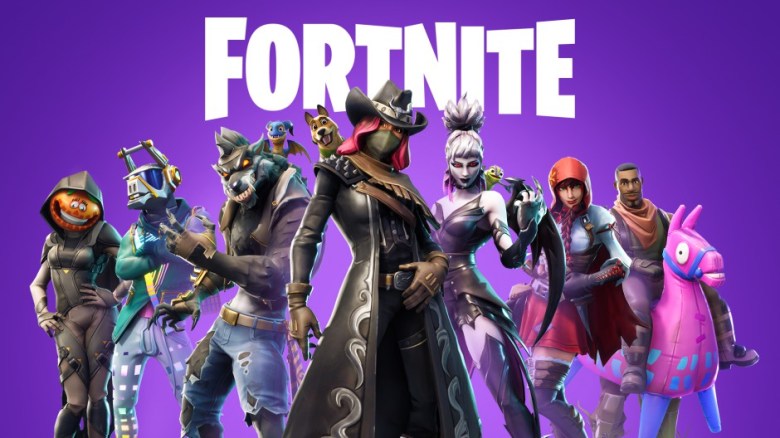
Plus the gaming engines themselves have become very advanced, so you can now have so much more depth with music integrations in games that wasn’t possible before. You’re starting to see these larger-than-life activations in games, like the Fortnite concerts and our collaboration with Rocket League, because the tech has advanced.
What’s also exciting is the idea of distributing music into games as well. Being able to distribute a song in a game similarly to how you would distribute it on Spotify. We do it with Rocket League in a way, although it’s not as advanced yet as what I’m talking about.
Getting to the point where music can be distributed into games and onto gaming platforms is a really exciting evolution that I would love to see in the near future. The tech is there, it’s just the collective industry coming together and making it happen.
Music Ally: You’ve been working with Rocket League for a long time. How has that partnership evolved and what are you doing with the game at the moment?
Gavin Johnson: We’ve been activating with them for seven years now, since 2017 when we did some compilation albums with them. It [the partnership] is a way for our artists to activate organically on the platform. They all get their own flags, and they coincide with special moments in the game, so that users are experiencing new music in the game when the game launches.
We now release music in Rocket League at the same time we release it on the record label, and it’s happening at a very rapid rate. We could release four to five songs a month. And it’s creating a music discovery mechanism within the title. Players of Rocket League are getting just as excited to hear new music in the game as they are to see new items in the item shop.
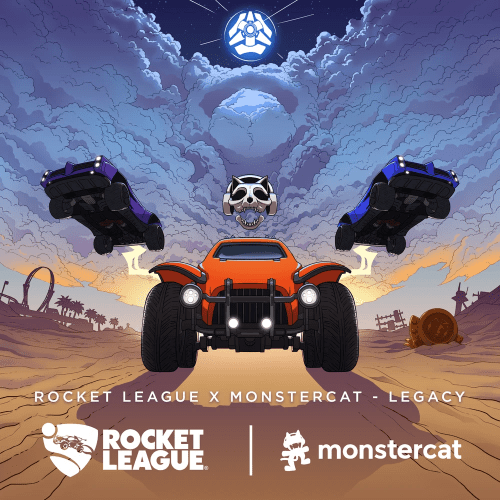
We’ve put hundreds of songs in the game already. When the song is a ‘lead song’ it’s the track that plays when the game launches. What’s great about that is that whenever you have a new player entering Rocket League, that song is their unique song from when they were introduced to the game for the first time.
It’s created this nostalgia engine within the game to where we have artists that released music in Rocket League back in 2018 or 2019, and you’ll see these comments on TikTok where people are like: ‘I remember when I was on Summer Break in 2019 and this song played!’
Everybody’s creating these very engaged listening moments: memorable moments in their gaming lives that attach to this music. And it helps artists get discovered. We’ve had artists of all sizes and in all genres of EDM be in Rocket League.
We’ve also done cosmetic items. We’ve done in-game limited-time events. We’ve done player anthems, which are collectible items that you purchase so that when you score a goal, it plays the song – it’s like your theme song in Rocket League. Annd we’ve done Rocket League into Fortnite collaborations and things like that too.
There’s so much depth that we’ve built over the years. We work with them on a daily basis on the title. Our company workflow is integrated into theirs to make these releases happen at such a rapid rate. So it’s very close to distributing music into games, and the music is also available throughout their entire ecosystem: their esports tournaments, their community content and a lot of their branded content.
Music Ally: How close are we to that vision of distributing music into games like Spotify that you mentioned? Is it happening?
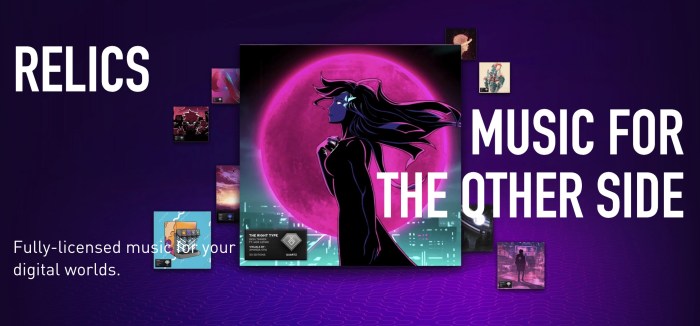
Gavin Johnson: We’re seeing in-game radios develop rather quickly, especially on the metaverse platforms. There’s one that we work with called Relics that’s developing, they provide fully interactive radio stations within games, starting on Roblox.
They’re integrated into a lot of the top Roblox experiences already like Catalog Avatar Creator and Emergency Response. They create these unique UGC boomboxes that players can buy, and they also blast proximity audio, so you can play whatever song you want and everybody around you can hear it.
Music Ally: What are your thoughts on making money on these platforms? What have you learned about what works well, and what are the opportunities you see for artists ahead?
Gavin Johnson: There are various models that you can work with in games. There are royalty models and flat-rate models and things like that. You can get incredibly creative and figure out the right fit with each developer and publisher that you’re working with.
However, I think what’s really important too is the indirect monetisation that comes from working in games. I think that’s something that’s often overlooked.
For example being able to work with a developer and publisher to have ways for you to convert your fandom and also to monetise streams on platforms like Spotify and Apple Music is incredibly important.
So it’s not just about hearing your music in the background of something. It’s about how can my brand: the artist brand, the Monstercat brand and the song, getting that right crediting fit in the game so that if I’m a player I can easily find what song that is and where I can listen to it beyond that activation.
The compilation albums were a great avenue for that. We have official playlists for a lot of our collaborations including Roblox, Rocket League and Fortnite, and we’ve had billions of streams come through these gaming opportunities, which result in indirect monetisation for our artists.
So, direct monetisation is one thing, but I think the indirect monetisation is what’s really exciting. It’s just about finding how to have compelling conversions through what you’re activating in, so that you’re able to monetise beyond the activation when it’s over.
Music Ally: It feels like it works best when it’s truly aligned: when the gaming opportunity isn’t just random, but aligns with the song and the moment in the game…
Gavin Johnson: Yeah, and when you really hit that home run of an activation that’s truly authentic, that song has an incredible lifespan.
Also, when we have a song that’s big in one game and gets really popular because of that activation, we’ll have a ton of other games that then want to license that song, so that’s ongoing, recurring monetisation based on the previous success of the record in another thing.
For example we work with tons of rhythm titles [music-rhythm games] and they love to work with songs that are popular in games. So we’ll have songs that become popular in games, then we’ll license them to the rhythm games.
Beat Saber is a good example. We did the first music pack that Beat Saber ever did, and we also connected Rocket League with Beat Saber and did our ‘Rocket League x MonsterCat’ pack.
That’s an example of how we can have a fandom from another IP and bring it into this IP. It builds this depth over time, so that the artists and songs become endemic within gaming, to open up that long-term monetisation for the records.
Music Ally: What are some of the recent activations you’ve done?
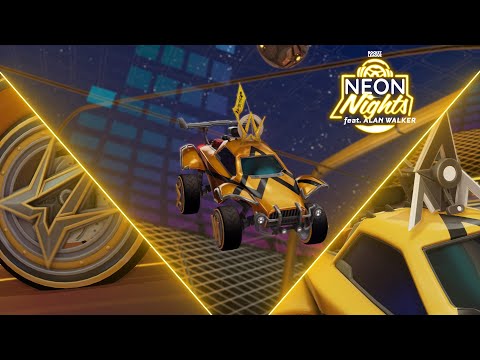
Gavin Johnson: Our most recent one was a triple-A activation with Alan Walker. Rocket League has an annual event in the game called Neon Nights. It’s their in-game festival event where they have a headline artist, and that was Alan Walker this year.
We did a four-track EP with him that released the same day in the game. We actually timed it so that the distribution hit music platforms at the same time as the in-game event. The EP was also named after the in-game event, so it’s the Neon Nights EP with Alan Walker. He had 15 cosmetic items, he had player anthems for all the EP’s tracks. Each track was a launch song in the game as well.
Another one we did earlier this year was with Riot Games. We have a song called ‘Crab Rave’ which is one of the biggest memes, and Teamfight Tactics is an auto-battler game, a spin-off from League of Legends. And they turned ‘Crab Rave’ into an official game mode.
It’s a feature within the main game modes where they have these portals that you choose from at the beginning of the game. One of them became ‘Crab Rave’ and it was one of the most popular portals. When you picked it you’d have to kill the dancing crabs, but then once you got later into the game the dancing crab can actually kill you! It was really hard, so you’d have professional players trying to get a higher rank actually die and lose their rank because of the crab…
Anyway, it was a fantastic campaign because the song was featured in the game when the crabs were dancing. And what was really magical about it was that it came together organically, because I am a massive Teamfight Tactics player.
I tweeted at Mortdog, the game design director, and he was like: ‘We’re never nerfing ‘Crab Rave’. You guys are gonna have to deal with it. I understand it’s hard’. But I said why don’t we buff it with the actual song? And the next day I was on a call to discuss bringing it together, and within a couple of months we had it launched as an official portal. It was like a big community celebration.
Music Ally: What advice do you have for other labels or artists who are thinking about gaming activations and what they can do?
Gavin Johnson: It’s really just about keeping your ear to the ground of music and gaming. Trying to identify where the opportunity for you fits. There’s so much more opportunity there these days.
You really can find your niche within music and games, whether it’s original soundtracks or production music or licensing existing catalogue. Identify what your target is in the space, and then just try to get as much face-to-face time as possible.
Don’t be afraid to do cold reach-outs. Attend events, networking, whatever you can do to get one-on-one with the particular area you want to work with.
And once you find that initial opportunity, the most important thing to keep in mind is how to provide the most player value through what you’re doing. At the end of the day, it really matters how the players react and what their first impression is of your music and your brand.
So, the more you can do to maximise player value alongside the developer or publisher you’re working with is critical. From there, just make that your foundation to keep building into more opportunities within games.
I really do believe we’re entering a new era for established music games today. The 2010s were really a melting pot for the new generation of games, after the Guitar Hero and Rock Band trend. I think we’re entering a new era for established music games now.
The other thing to mention, of course, is that music rights are super-challenging. It’s still a difficult area to manage. With music and games, the end result for what can appear in a game really is dependent on whether you can clear the music rights and the brand as well.
The limitations that can come with music rights can really limit the innovation, the progression and the evolution of music and games.
We try to make it easy. The majority of stuff in our catalogue is one-stop: it’s fully master and publishing controlled, which makes us as frictionless as possible within games. But when they [developers and publishers] are dealing with music that has 10 different writers and publishers, it can limit the creativity and innovation.