
Eamonn Forde Meets… – each month, the veteran music business journalist speaks to a senior industry figure about the topics that really matter – and gets the opinions of the people who make the decisions that count.
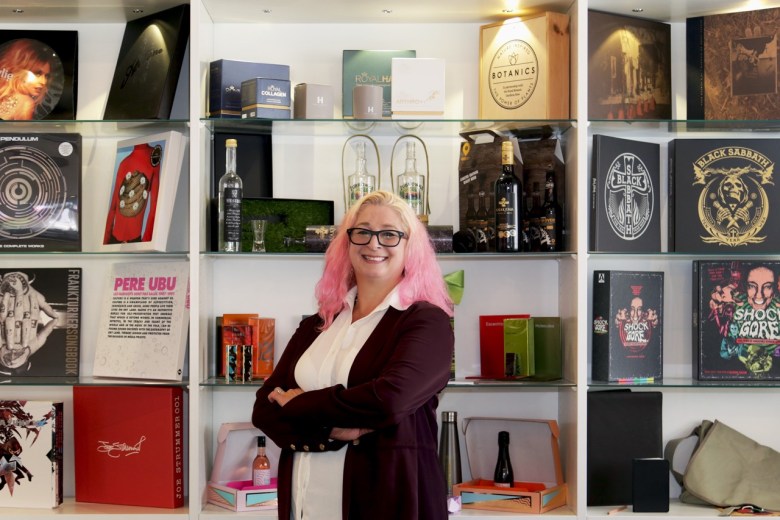
September 2025: Karen Emanuel, CEO and founder of Key Production. Trust issues: Karen Emanuel set up Key Production in 1990 and it has weathered the storms of the assorted format upheavals since then. She is planning her exit from the company in a very different way, setting up an Employee Ownership Trust whereby Key’s staff will indirectly own the company, their shares handled and protected by a trust. At a time when so many owners’ exit strategy is to sell to the highest bidder, there is an altruistic alternative.
She talks through her reasoning for setting up an Employee Ownership Trust (EOT), why it is important to reward and value staff as they are any company’s greatest asset, what is involved in setting up an EOT, where the trust itself can prevent senior management and the board from making reckless decisions, and why more owners should at least consider this as part of their retirement plans.
Nature abhors a vacuum. And the music business abhors the multitudinous, hence its unrelenting march towards consolidation. Thirty years ago, there were The Big Six major labels; now there are The Big Three. Independent players are being bought up, with some in the indie sector lobbying against this – while those selling up to one of The Big Three view any major-bashing as undignified.
As a founder and owner of a company, you can do whatever you want with it. That’s capitalism. Shut it down. Give it to your family. Hand it over to a charity. Allow a management buy out. Sell it to the highest bidder and let the regulators grapple with the red tape.
There is, however, another option: set up an Employee Ownership Trust (EOT). Unquestionably the biggest and most famous example in the UK is the John Lewis Partnership. The model was also in the news recently when Gary Grant, founder of UK toy chain The Entertainer, handed over his 160 stores to his 1,900 employees. In the music business, Kudos Records was the first company to become an EOT and this was a major inspiration for Karen Emanuel to also move to turn music manufacturer Key Production into an EOT.

Pre-Covid, she began thinking about her future as well as the future of the company she founded in 1990. Covid hitting made a lot of people reassess their lives and careers and this spurred her on in her plans.
“If I wanted the company to continue after me and leave a legacy, then I’d have to do something about it,” she says. “If I’m running a company and suddenly I’m not here anymore, what happens? The cogs began to turn. OK, what does the next stage of my life look like? And what does the next stage of the company’s life look like?”
Selling to the highest bidder was an option, of course. “But it didn’t feel right for me.” Nor did a management buyout. Insulating the company culture and protecting staff were critical, she says. “If you sell out to another company, they tend to come in and change things, and there’s a lot of more uncertainty,” she explains. “There is the risk that a lot of things will change […] Having run a company for this long and having been this involved, it would feel very wrong for me to just turn my back and run away with the goodies.”
A different path out
She owned Key outright (“In the past, I have had minor shareholders, but I bought them all out”), which made things neater and easier. In her case, all the company shares were effectively sold to a trust which holds these shares on behalf of all employees who have been with the company for at least a year.
“Some of my staff have been here 30 years, and a lot have been here 20 years,” she says. “There are a lot of relationships that have been built that I didn’t want to walk away from. For me, it felt like the right thing to do.”
Having run a company for this long … it would feel very wrong for me to just turn my back and run away with the goodies
Karen Emanuel
The company has to be valued by a number of separate accountancy/financial firms and it is all approved by the Tax Office, who also approve the transition plan and pay outs.
She says in her case she does not get a lump sum but rather a share of future profits for the next eight years. (Companies can borrow the money to give the owner everything in one go but she did not want to saddle Key with a loan.)
“The downside of an EOT as a seller is, if the company doesn’t do as well as you’ve planned on it doing to pay you out, you might never get paid out,” she explains. “So you take a risk. If you’re selling to a third party, you get all the money and off you go. You probably stay for a couple of years, because your contract insists on this, and you might get remunerated according to the turnover of the company or the profits of the company. This way, you work out a way that you’re going to get paid out over a number of years.”
It costs staff nothing as they, if they have been with the company at least a year, automatically become part of the EOT, with their shares worked out depending on hours worked, current salary and length of service. “That’s the beauty of it,” says Emanuel. “No one owns any shares and no one pays any money [for shares]. It’s the company itself that pays the money of the worth of the company. So you pay it out of future profit.” (In the UK, staff can each get bonuses of up to £3,600 a year tax-free.)
Valuing and undervaluing employees
Generally employees are, she feels, far too often undervalued (or simply not valued at all) by companies that only reward the most senior executives with shares or bonus plans. “Which is foolish, because it’s your staff who do all the hard work for the company and actually represent the company. They’re the ones that enable the company to do well. I’ve always found it really odd that people don’t value their staff.”
She adds, “The idea behind an EOT is to enable staff a lot more to have a voice and to be a lot more transparent with people.”
The trust also serves as a bulwark to protect the staff’s interests against possible bad decisions by the board or senior management. “If the board decided to do something really ridiculous, the trust has got the power to say no as it is not for the good of all the staff or the company,” she says.
Emanuel will remain CEO for the next year and a half as senior management are currently being coached to streamline the transition.
“This keeps us completely independent and keeps us running,” she explains of why she chose this route. “Culture is really important to us as a company. This way you keep the culture of the company and you keep its ethos how I’ve built it. Hopefully it can go from strength to strength when I’m not around. Personally, this is what felt best in here [pointing to her heart] for me. And for the company.”