


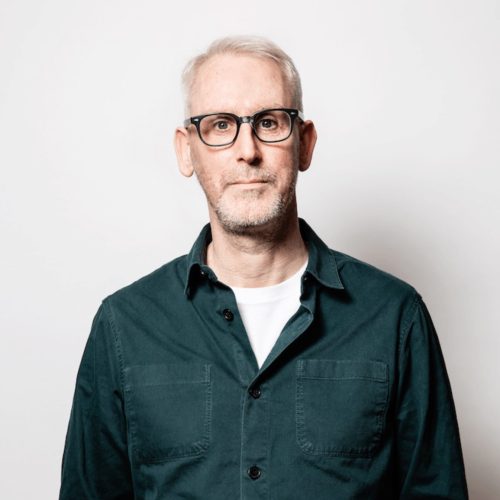
Eamonn Forde Meets… – each month, the veteran music business journalist speaks to a senior industry figure about the topics that really matter – and gets the opinions of the people who make the decisions that count.
April 2025: Molly Neuman, president of CD Baby. Creation degeneration: musicians can theoretically reach the entire world, but making their streaming and live income add up and work symbiotically has never been more fraught. Bridging the yawning chasm between recorded music income and live music income increasingly feels like a conjuring trick, but the industry as a whole needs to find ways to make such “magic” possible.
Neuman talks about the importance of ensuring that emerging artists can thrive, why having a business value that is viable for everyone should not just be a pipe dream, where sharpening acts’ political thinking should happen and why having musicians storming the C-suite can only be a good thing for the whole business.
A simplified history of the record business, certainly at the major label level, holds that the lawyers took over in the 1960s and 1970s, marketing took over in the 1980s and 1990s and by the 2000s, external technologists started to run things remotely (except the labels refused to believe or admit this). It is a reductive and simplistic history, of course, but, barring the odd executive appointment here and there, it is fair to say that musicians themselves never took over the top tiers of major music companies.
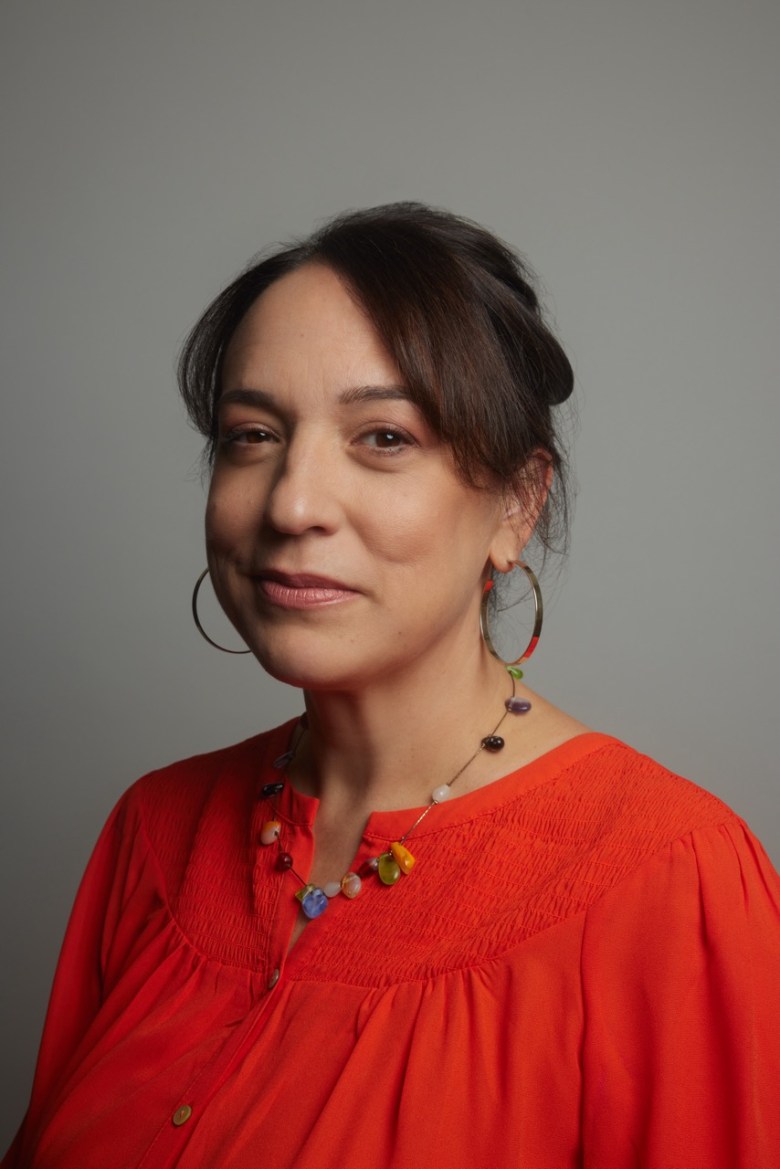
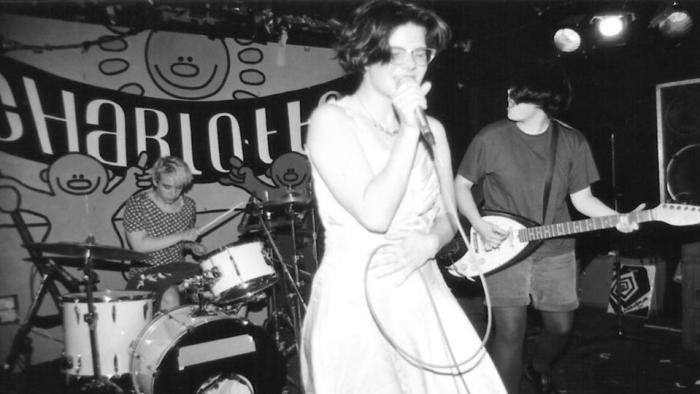
Molly Neuman has one of the roundest music careers out there. She started off as drummer in riot grrrl band Bratmobile in the early 1990s, then moved into A&R and artist management, then held senior posts at digital services eMusic and Rhapsody, then shifted to independent trade body A2iM, then Kickstarter, then Songtrust, then became chief marketing officer at Downtown before being appointed president of Downtown-owned CD Baby in June 2024.
We start by discussing how to bridge the gap between recorded and live music to help emerging artists thrive, but it soon accelerates into deeper, more complex topics such as Marxist attitudes to musical creation and how to retain ideological purity when selling out is a) easy and b) lucrative. (The blazing intensity of the riot grrrl influence is never far away.)
Bridging the gap
“When I think about being at a label in the 1990s and the early 2000s and supporting artists, we didn’t have the same sort of infrastructure and resources as the majors to write $100,000 cheques for a tour, to have production and hotels,” she says. “Most of our artists were sleeping on couches and floors, including myself. It wasn’t a success dream, exactly. It was more the dream of creativity, connection, inspiration and knowing that you were part of that community which was as exciting in New York, Oakland, Seattle, wherever, and making that part of your life journey.”
This is not some abstract reminiscing as Bratmobile are touring again this summer and Neuman is experiencing an existential itchiness about whether or not it will all work out financially.
“We have a label, but we don’t have a new release,” she says. “We have an audience but now we’re talking about a different generation. The people that were our fans now have kids, and maybe they’re nostalgically bringing some of them along, or there’s a new generation of feminist punk girls that might want to come. Those are all great things. We sell tickets for a reasonable price, but we’re still asking, ‘OK, are we going to get everybody in the door? Are we going to have the right production to support it?’ And everything is very expensive.”
The margins from live are, she confirms, “very thin” for most despite the headlines about a booming live business in toto. “When you start to segment it out, it’s still mostly those very successful artists who are making that money.”
To her mind, this begs a multitude of questions. “How do you actually create a more sustainable business that supports the middle class, the aspirational side of the music creation community, which is where I’m living mostly right now? There’s heavy lifting work to do.”
A narrowing chance of success
The concern she has overall is that, as more music floods DSPs, there is “a narrowing of success” when there really needs to be the opening up of “a big pool of possibility”.
We discuss Liz Pelly’s recent book on music streaming economics. Neuman has plenty of praise for Pelly’s work, but also some questions. “I understand the pessimism and scepticism,” she says of the growing feeling that streaming is often less a springboard and more an oubliette for new acts.
“I think it’s very rational to think that, without radical change in certain areas, it could be unrecoverable in certain [ways]. But that’s also a sentiment you can apply to most aspects of life these days. There are some dire, concerning, unfathomable historical situations that we’re all experiencing. I think there has to be an antidote to it. I think there has to be a counterpoint that can hopefully not have the assumed or the worst-case scenario be the result.”
That optimistic counterpoint, for Neuman, has to be “ethically motivated and presenting a fair opportunity” that ends up having “a business value and is viable for all parties”.
“It is a much more literate class of creator that we have now”
Molly Neuman
At the heart of the issue around artists being better off in straitened times is the need for acts to not just be better educated but also for artists to enter the music business at an executive level and draw on their own experience to fight the corner of musicians more directly.
“I think it is a much more literate class of creator that we have now – much more sophisticated in understanding,” she argues. “The resources of understanding are so much more tangible.”
Having musicians ascend to the executive and board level at music companies could profoundly recalibrate things.
“When you look at the makeup of a lot of executive teams at various large companies, most of them were MBAs or they were attorneys,” she says. “I’m hoping that’s part of the shift that we’ll see. If there are people who have more of an artist center driving some of the future, that will be more positive.”

DIY: DI-When?
Riot grrrl was forged in unapologetically left-wing critical theory (“the political economy, feminist theory, Marxist theory”) and she feels musicians in the 1990s aspired to own the means of production. Even so, she says, too few musicians set up, or still run, their own labels today.
“I don’t think we had the resources or the business instincts necessary to be a founder of a label,” she says of the alternative music scenes of the 1990s. “We just didn’t have the nudge. Now you don’t need to own the infrastructure in the same way. You can hit and you can still build a really viable business.”
She points to musical peers such as Fugazi, Bikini Kill and Superchunk “who have made multi-dimensional careers in music with their core values at their center is” as proof of what acts can achieve without compromising. “There is a lot of inspiration to still apply to what new generations of music creators can perhaps consider,” she says.
Neuman remains optimistic for the future for musicians, both creatively and economically, despite the clammy hand of pessimism grasping at the discourse.
“Back to believing in the possibility of this not being a culture-ending moment that we’re living through,” she says, “there is a possibility of a different result where we can help drive creativity, we can help drive voices.”