


Eamonn Forde Meets… – each month, the veteran music business journalist speaks to a senior industry figure about the topics that really matter – and gets the opinions of the people who make the decisions that count.
March 2025: Liz Pelly, author of Mood Machine: The Rise Of Spotify & The Costs Of The Perfect Playlist. The Spotify showdown: as the financial centre of gravity for much of the record industry today, Spotify – along with other DSPs – has been hailed as “saving” the business and powering its regrowth.
Yet, argues Liz Pelly – journalist, author, and long-standing critic of the music streaming business model – where it gives with one hand, it is frantically taking away with its other. Streaming, she argues, is becoming a moral and ethical conundrum that consumers need to be more attuned to.
Her book on the music streaming industry is published today in the UK, and Pelly talks to Eamonn Forde about puncturing what she sees as Spotify’s self-aggrandising myth building, how she believes streaming is growing in inequality, where she thinks it underestimates listeners – and how alternative models to the dominant DSPs can still be built.
It was another landmark year for Spotify in 2024: 263m subscribers; 675m monthly active users; and, most significantly, an operating profit of €1.37bn, compared to an operating loss of €446m in 2023. Some 18 years after its founding, and amid snowballing losses, the streaming service achieved its first full year of operating profit.
The company also boasted of paying out $10bn to rightsholders in 2024 and is now approaching $60bn in payouts since it started. This news saw its share price rise by 13% and, as of 6 February, it had a market cap of $125.7bn, an all-time high for the company.
As UK satirical magazine Private Eye would put it: trebles all round!

Except… the heavy patting on the back Spotify is giving itself arrived at the same time as the publication of Mood Machine: The Rise Of Spotify & The Costs Of The Perfect Playlist, the new book by Liz Pelly.
Pelly has been pulling the service’s feet closer and closer to the fire since her first piece in The Baffler in 2017 on streaming’s detrimental effect on listening and the growing inability of musicians to make a living in a world of playlists and micropayments.
While it has Spotify in its title, Pelly insists many of the book’s arguments apply equally to all the other DSPs.
“It’s a book that offers an entry way into a story that doesn’t start or begin with any one company,” she says. “Because it is the dominant streaming service globally, hopefully using the story of Spotify draws people into considering the bigger impact of the streaming model.”
Pelly comes from the grassroots of music, tied to DIY ethics and morality, and is offering up a manifesto to address the damage caused by streaming.
“How could the person who runs this major streaming service be so out of touch with the lived reality of working musicians?
Liz Pelly
A manifesto for change
The book, through analysis as well as whistle-blowing interviews with ex-Spotify employees (who leaked plenty of internal emails and Slack posts), is a coruscating read. It lays out an argument that users must ask themselves difficult moral and ethical questions about accessing streaming services.
She also punctures Spotify’s own myth making, presenting it as an unreliable narrator of its own history. Co-founder Daniel Ek was not there to “save” the music business, she insists. He and Martin Lorentzon had backgrounds in advertising (their true focus, she says) and Ek, for a while always pictured in reaching distance of a guitar, was not “the music guy” he would like to be seen as. (She notes that most Swedes learn a musical instrument from an early age so he is not unique here.)
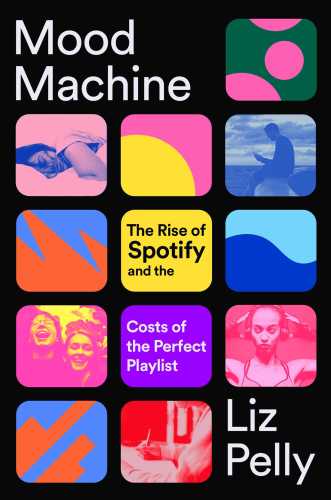
“People are always wondering: how could the person who runs this major streaming service be so out of touch with the lived reality of working musicians?” she says.
She also feels the thesis around streaming “saving” the record business is erroneous. “It’s maybe not the popular perspective in the business press, but I don’t necessarily see drawing venture capitalists into music as a good thing for music,” she says. “The problems created by venture capital aren’t going to be solved by more venture capital.”
Pelly is enormously critical of the pro rata royalty payment, but equally as despairing about Spotify’s buying out of mood music to lower its own royalty payments and its ruthless mining of user data.
She quotes an ex-employee who says Daniel Ek spoke at a company meeting and declared, “Apple Music, Amazon, these aren’t our competitors. Our only competitor is silence.”
While the same could be said of radio since the late 1920s and the Walkman in the 1980s, Pelly says there is something much more insidious at play here with streaming.
“Something that’s new is the way in which this idea of lean-back, listening – listening from the minute you wake up until the minute you go to sleep – is now also tied to so much data collection optimisation, so much user targeting,” she argues.
One gets the impression from reading her book that Spotify, or at least its most senior executives and backers, has an extremely low opinion of its users, presuming they cannot distinguish between “real” music and commissioned mood music.
“The music industry in general really underestimates listeners,” she says. “[There is an] unwillingness to take risks and [back] challenging music and ideas by just assuming people are incapable of connecting with music.”
She regards her book as part of a continuum of calling out the “ruthless exploitation” underpinning the music business. This has been exacerbated by the industry genuflecting before a tech business that is even more ruthless in its pursuit of profit maximisation and its antipathy towards culture.
“A thing that I heard over and over again from people is that they were excited to go work at Spotify because they thought they were going to work in the music business; but then they realised, when they got there, that they were actually going to work in the technology industry,” she says.
“The music industry in general really underestimates listeners”
Liz Pelly
An antidote to cheerleading
The book is not a pessimistic screed (as, presumably, Spotify et al may dismiss it), and ends with Pelly outlining how musicians and consumers can push against the blanding-out of streaming and the financial imbalances it causes for musicians.
There are multiple critical voices quoted in the book, many of them anonymous, but little counterbalance from labels and artists who genuinely see the benefit of Spotify.
Pelly feels Spotify’s flag-wavers have been given enough coverage over the years and the book is intended to be the antidote to their (uncritical) cheerleading.

“It was really important to include the voices of artists and musicians, because they’re so often left out of music business reporting,” she says.
“It was important to also tell a story that felt more rooted in the experiences of independent labels. And not just the big indies, but smaller independent labels that have also come to feel dependent on these services, and Spotify in particular. And the impact that Spotify has had on their operations.”
Neither is there an interview – a J’Accuse! summit – with Ek. Pelly says she did not try to speak to Ek for the book. That feels like a missed opportunity: she could have put all her criticisms of the service to him directly and, even amid an inevitable blizzard of PR-approved platitudinous quotes, made him squirm.
“We have no shortage of instances of Daniel Ek sharing his perspective on most of the topics that I cover in this book,” she argues.
“Towards the end of the book, I have a note on sources where I talk about how, if readers want Spotify’s official, corporate-sanctioned version of their own origin story, here are some places where you could check that out. I wanted to use the short number of words that I had to tell the stories of people who haven’t had a platform before.”
An alternative vision
The book’s conclusion is about offering alternatives, looking to library programmes that support musicians, micro-scenes and where public funding can be used effectively in the arts.
“In the independent music world right now, there’s a lot of interest in exploring things like cooperatively run streaming services,” she says. “Or even people asking what it would look like to have a streaming service that is anti-profit, that returns its value back to musicians, and thinking about musicians as co-owners of services.”
Pelly feels there is a pushback happening against the swamping forces of VC-backed streaming.
“It was important to also tell a story that felt more rooted in the experiences of independent labels”
Liz Pelly
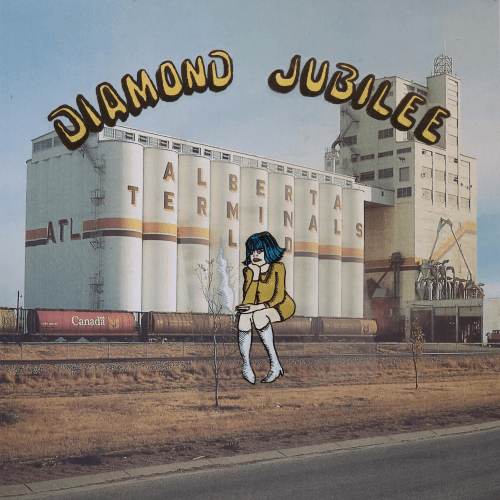
“There are things that I see happening all around that give me, maybe not optimism, but hope that something is culturally shifting,” she says. “Last year, Pitchfork’s number one album of the year was the Cindy Lee album [Diamond Jubilee]. That wasn’t on streaming services and was a really interesting example of a brewing cultural backlash to the culture of streaming.”
She also cites specialist labels like International Anthem as pointing to ways around the behemoth DSPs.
“When their albums come out now, they go on Bandcamp and their webstore first, and they don’t go on streaming services until a few months later in order to incentivise their community […] to buy the music directly from musicians,” she says.
“Gestures like that signal to me that people are trying to figure out solutions or approaches to navigating the current music ecosystem that work better for their artists and the listeners who support their labels.”
For all of this to happen at a scale to make material difference to the lives of musicians, it requires deep societal change. Parallel that with arguments about fast fashion/sweatshop labour, factory farmed meat and environmentally damaging transport: most consumers, in theory, would not like them to exist, but in practice (due to pricing and/or laziness) they continue to support such products.
There is an inherent social solipsism that will take generations to recalibrate. Ethical streaming, sadly, is no different. All is not lost, but nothing can substantially change until enough users do. This is the curse of consumer sovereignty.
Mood Machine: The Rise Of Spotify & The Costs Of The Perfect Playlist is out now.