

Guest column: Music Ally publishes guest columns which voice the opinions of notable authors that advance specific perspectives on important issues. These are chosen at the Editorial team’s discretion and are not paid-for. You can explore the guest column archive here.
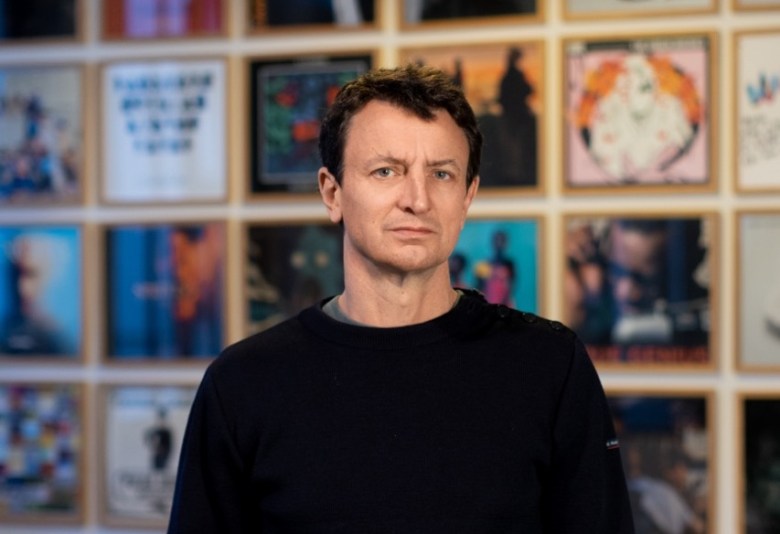
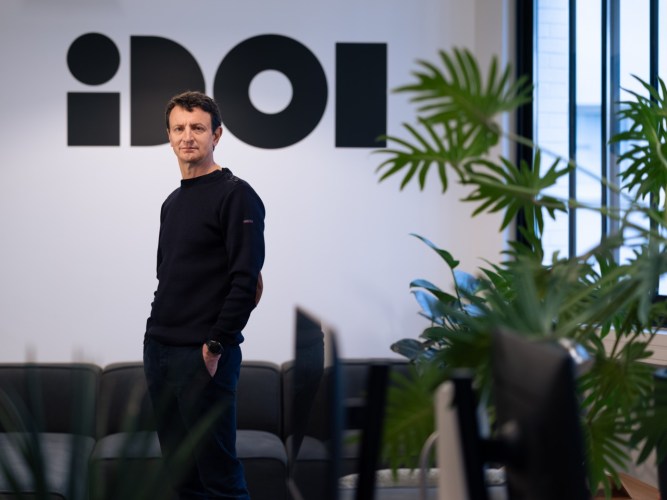
This guest post is by founder and president at IDOL Pascal Bittard.
As deals are pursued and transparency principles established with regards to generative AI music, is it time to explore a blanket approach?
Generative AI models for music are disrupting how we create, consume, and remunerate music. Copyright is being scrutinised or updated in various jurisdictions, and a variety of lawsuits are working their way through the courts.
Deezer recently reported that fully AI-generated music now makes up 28% of all uploads to its platform, which leaves little doubt over whether computer generated music is competing with human artistry. If AI generated music is to receive royalties (and I’m not sure it should – one could argue that 100% AI generated tracks should be excluded from DSPs’ revenue pools), then licensing is going to be crucial.
As Bloomberg reported in June, the majors are in talks to license their catalogues to Suno and Udio – the same AI startups they’re suing. Let’s assume they will eventually be successful – although Suno’s response to independent artist Anthony Justice, arguing that genAI music doesn’t infringe the copyrights of music it was trained on, suggests there may still be a gulf to bridge in licensing negotiations.
Even if the majors license both platforms, it’s quite possible that no single rightsholder, regardless of size or influence, would be able to licence its entire repertoire to every AI platform.
Could collective licensing fill the gap?
Direct licensing may also pose a problem for smaller players. Those with less bargaining power may never reach the negotiating table and, unlike with streaming or UCG, reporting unlicensed music usage is likely to be near impossible considering how difficult it is to prove that AI developers have trained on particular catalogues. With no real clarity around which music has been ingested where, there is arguably little incentive for AI companies to proactively license repertoire that has already been used for training.
Could collective licensing help fill in the gaps? Potentially, yes, via songwriter CMOs and organisations like Merlin. The indies’ licensing agency recently teamed up with Kobalt on a deal with ElevenLabs to enable artists and songwriters to licence their own and members’ catalogues for genAI training. But while it’s more productive and efficient to act collectively, the same risks and limitations as direct licensing persist, sometimes with greater complexity in terms of the authorisations required from each artist or songwriter.
Direct licensing may pose a problem for smaller players. Those with less bargaining power may never reach the negotiating table.
This leaves a third option, a blanket licence, created outside of the usual free market system, often by government statute. As opposed to a collective licence, its beauty is in its simplicity. The private copy levy could be a good prototype to draw from – where a surcharge is placed on the price of all copyable media sold in countries where the levy operates (several EU member states, as well as Canada, Russia, Norway and beyond).
This levy is then distributed to rightsholders, compensating them for revenue losses as a result of lawful copies made for private consumer use, such as copying onto CDRs.
There’s no reason why a similar blanket licence couldn’t be explored for licensing generative AI. As well as remunerating rightsholders, a blanket solution would allow AI developers to continue training and innovating via the widest pool of original works possible.
Finding a fair rate
The next step would be for rightsholders, in collaboration with national authorities and all other stakeholders, to explore a suitable structure for a blanket licence. This might, for example, allow AI developers to train their models on all copyrighted works in exchange for a percentage of the royalties generated.
Of course, a fair rate would need to be agreed – 30-40% could be a good initial benchmark, for which there already exists a precedent. Fairly Trained-approved music generator Beatoven.AI says it will attribute 30% of its revenue back to the rightsholders whose works their model trained on. This levy could ultimately be enforced by local governments, paid by DSPs (on the share of AI-generated tracks) and collected by CMOs.
Where would this take place? France was one of the early adopters of the private copy levy, and is generally highly supportive of the culture sector. Perhaps it could be a good place to trial a similar compensation system for licensing music used to train AI?
In all cases, as part of any licensing system, transparency should become obligatory for AI developers when sharing AI-generated tracks with distributors and DSPs, and for the latter when presenting these tracks to consumers. Debates surrounding artists such as Aventhis and The Velvet Sundown, both suspected to be AI-driven, has given us a window into the confusion caused by a lack of transparency.
The US Copyright Office has already issued guidance that all works containing more than a trivial amount of AI-generated material must have that disclosed. This would enable revenues to be fairly distributed, whether under direct, collective or blanket licences, and allow consumers to be fairly informed about what they’re listening to. A BPI survey found over 80% of UK music fans think that music generated solely by AI should be clearly labelled. As deals are pursued and transparency principles established, is it time to explore a blanket approach?