

Team Talk is Music Ally’s interview series, where our marketing experts speak to music industry teams about their latest work, best practices, and smart strategies. You can find the archive here.
Toolroom Records famously got its name from an actual toolroom. DJ and house-music producer Mark Knight founded it in 2003 after setting up a studio in his parents’ toolshed.
From those roots as a small, independent label releasing vinyl records, Toolroom has grown into a brand encompassing recorded music, events and education. Toolroom’s COO Miles Shackleton talked to Music Ally’s Marlen Hüllbrock about the journey so far.
Music Ally: Tell me about where Toolroom Records is at in 2024. How do you think the label is perceived within the industry?
Miles Shackleton: I think it’s grown to be one of the more successful, bigger indies in dance music. When people see our logo, I think they know what it means and what it stands for, even outside of producers and DJs. I think to the wider audience is stands for a threshold and quality of anthemic, accessible house music.
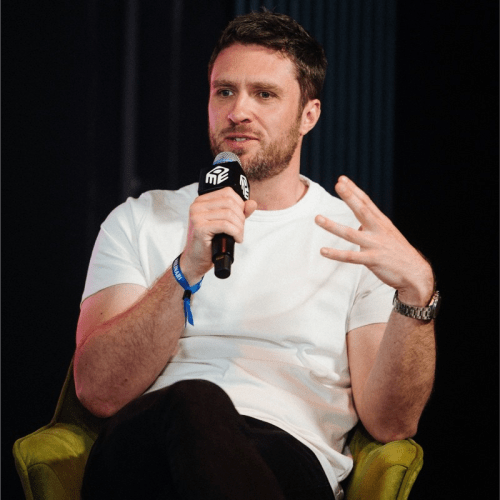
We’ve been on a journey over the last 20 years of building the brand. We’ve got around a million followers across our online ecosystem, we do events all over the world, we have club residencies in London, Tokyo, LA, New York.
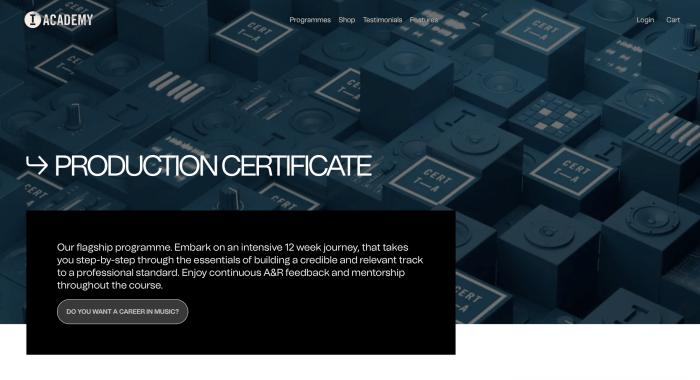
And then additionally to that we set up Academy, with the aim being to break the barrier down between new artists and record labels. I think we were probably the first dance label to spot the opportunity in education and really believe in it. We’ve built that out over the last five or six years, and it’s become the fastest growing element of our business.
Music Ally: You talked about people understanding what the brand stands for. How have you done that? What makes them feel connected to Toolroom?
Miles Shackleton: First of all it’s rooted in the consistency of the musical output. The best labels have a sound. They have an identity. The Toolroom sound is: if you’ve got really underground over here, and really commercial over there, we occupy that middle bit. And that’s actually really quite hard to do for a long period of time.
The ethos of the label, musically, was always that if a DJ was playing a set and was a bit stuck, or the crowd was a bit flat, if you put a Toolroom record on that’s going to get the party back! We’ve never really strayed from that.
The other thing that’s interesting is that back in 2014 I did a focus group when I rebranded Tooolroom, and spoke to loads of our fans to ask what they thought and felt about us. One word kept coming up a lot, which I don’t associate with labels, and that was ‘approachable’.
I think a lot of labels and the music industry in general can be quite aloof and away from their fans. Whereas with us the people that set up the label are just really normal, approachable people, and that value has filtered through.
Our fans feel very, very close to us. If you call Toolroom now, it could be the founder picking up the phone rather than the label assistant. We keep those values. And we’ve done a lot of work around superfans: our top 200 people.
We treat them really well, we keep them close, and we give them special things, and they become your foot soldiers then and it kinda amplifies.
Music Ally: What kind of special things do you give to the superfans? How do you work with them?
Miles Shackleton: We give them music first. We have a separate email list, where we’ll trust them with new singles that get promoted even before we promote to top-tier DJs. It’s that kind of exclusivity.
We’ll make exclusive merchandise and send it to them. We send them things on their birthdays. We do events here at HQ, we’ve got a club room here which is where we test music, and we will occasionally do superfan parties.
We did a house-music quiz night in our local pub and had a big lock-in! Stuff like that: getting underneath the hood and meeting us as people, which makes you feel more connected [as a fan]. And then, of course, when you experience those things everyone then gets straight on the UGC [user-generated content] and starts sharing it.
That’s our amplification. It can seem like quite a lot of work for 100 people, but as most marketers will tell you, what’s gold dust is actually word of mouth. You can worry about all kinds of metrics, but if someone recommends you to someone else, that’s always going to be the best thing.
Music Ally: How have you seen the marketing, community and brand-building aspect of the label change over the last 20 years? What are you doing differently now?
Miles Shackleton: One thing I’ve found recently is that it’s harder to cultivate really strong fandom on social now. It just feels like harder yards to me. I don’t know if it’s the proliferation of dark social and private forums like Reddit and Discord that’s split the audience.
If you’ve got limited resources, which all independent labels do, how do you put your time into each platform? Where do you herd people in terms of your superfans? It seems they’re more spread out, whereas four or five years ago it felt like: just focus on Instagram and Facebook to a lesser extent. So that’s been a challenge.
Going much further back, pre-social, it was much more events-driven and much more regional. We did work on having events for superfans before gigs in certain territories, because we had no way of reaching them. But then obviously social changed that.
Music Ally: Let’s talk about the Academy. Why did you decide to launch that in 2016?
Miles Shackleton: There were a number of reasons. First, we noticed the amount of demos we were getting: up to 1,000 a week. Those people wanted our opinion really badly! We noticed some common threads in what people were doing wrong in their music.
Secondly, whenever we put out some content on socials that was like ‘top five tips to get signed to a label’ it got a disproportionately high amount of engagement. So these two things suggested that our audience, our demographic, were creators.
Besides that, I’d had a career break outside of music, working in education running the marketing for two big London universities. In that time I’d learned a lot about student-acquisition marketing, but also how to build education products.
And to my point earlier about our brand: we’re really consistent in our music and we’re really approachable as people. Those two qualities lend themselves to good educational practice. So all of that at once led to the idea that we could do something in education.
We started with some production tutorials – on-demand ones, which I know are ten-a-penny now, everyone does them. But at the time it was quite interesting and innovative to have real artists teaching their production processes. That was our first jump in, it was pretty successful, and that led us to keep pushing outwards.
Music Ally: What are the key challenges you see artists facing at the moment, and what educational content are you providing in response to that?
Miles Shackleton: On the music production side, the challenge is definitely getting feedback that isn’t just your friends saying ‘That’s amazing!’
One thing we have built into our curriculum is A&R feedback from professionals at the record label, and that more than anything is what’s pushing artists further. Really challenging, pushy feedback that gets them better. That’s integral and unique to us as music-production teachers.
In terms of challenges within artist development, we did a research report into the struggles electronic-music artists are facing right now. We spoke to about 270 new artists and quite a lot of industry figures as well, and cross-referenced it.
We found that 76% of them felt they couldn’t build a financially sustainable career; that only 2% rated their network as strong enough; and that 88% of them were really struggling to grow an online audience.
So, those are the pain points that artists are facing, and that’s everything to do with brand and marketing, and building hype, then networking, and then the financial side of things: how do you get gigs and make an income from this?
Music Ally: How is the Academy growing? You said it’s the fastest-growing part of the business now…
Miles Shackleton: Yeah, it’s grown us by 30% in five years. We’re close to seven figures now just on education. In fact we’ll pass that this year, which for an indie is handy! But more important than the money is what it’s achieving: the artists we’re finding.
We found this producer called Essel who’s from the Academy, and she’s now done 100 million streams. She was our best-selling artist last year. I don’t think she’d even released anything when she came to the Academy, but we spotted the talent pretty quickly and started working with her, then we signed her for full management.

Music Ally: What’s next for Toolroom both as a label and in terms of the Academy?
Miles Shackleton: As a label it’s about finding that growth, in what this year is a somewhat challenging market in streaming. We really want to push out internationally, that’s going to be the next big thing for us.
We’re fully independent: we distribute ourselves. So it’s a case of how do we grow beyond our key territories of the UK, US and Australia? How do we go to emerging territories? For example we’re going to be looking a lot at the Middle East over the coming months and years.
We’re going to keep working on pushing our artists further. It’s an artist industry at the moment. We can push the Toolroom brand and that’s really important, but what DSPs are telling us is that they want artists to have 12-to-24 month plans and strategies. So we’re pivoting to that.
Record releases now are much longer: the campaigns go on for much, much longer. It could take six months before one of our releases might land in a strong playlist on Spotify, so we’re learning to keep the pressure on in campaigns for a longer period of time, within our resources as an independent.
In terms of the Academy, we’ve been all about music production for five or six years. Okay, we’ve taught people how to make music and that’s been largely successful. Now, how do wwe teach them everything outside of that? How to break through, how to build your socials; how to build your network; understanding algorithms; music law; marketing campaigns; branding: telling your brand story.
That’s the next focus for us as an Academy: to pivot to that type of education.