


Team Talk is Music Ally’s interview series, where our marketing experts speak to music industry teams about their latest work, best practices, and smart strategies. You can find the archive here.
“Long after the yoghurt has soured, the song is still brilliant! If you take one thing away from this interview today…” jokes Tim Dellow, co-founder of independent music firm Transgressive.
“Milk doesn’t age as well as this hit song!” laughs co-founder Toby L. The song in question being ‘Wild Young Hearts’ by The Noisettes, whose use in a 2009 TV ad for yoghurt brand Shape was an early sync success for the company.
Transgressive celebrated its 20th birthday last year, having expanded from its origins as an independent label into publishing and management. Its roster ranges through Arlo Parks, Damon Albarn, Foals, HotWax, Julia Jacklin, Loyle Carner, Marika Hackman, Moonchild Sanelly, Mykki Blanco, Songhoy Blues, Sophie, Sparks and many more.
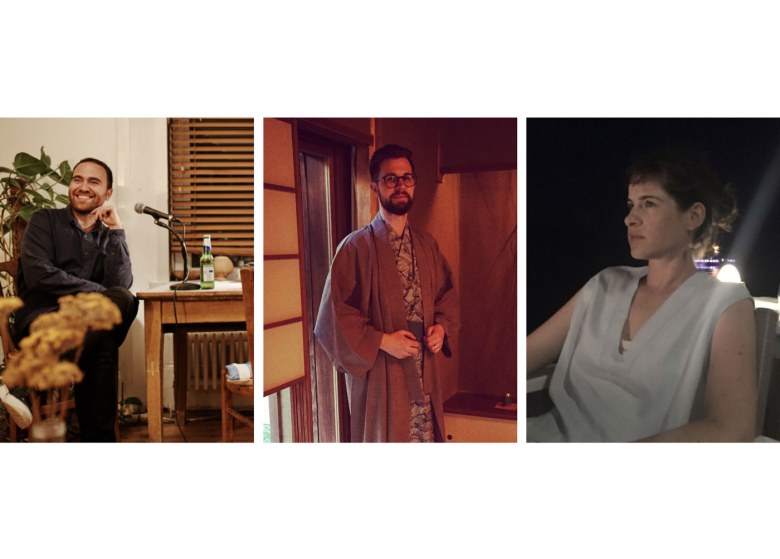
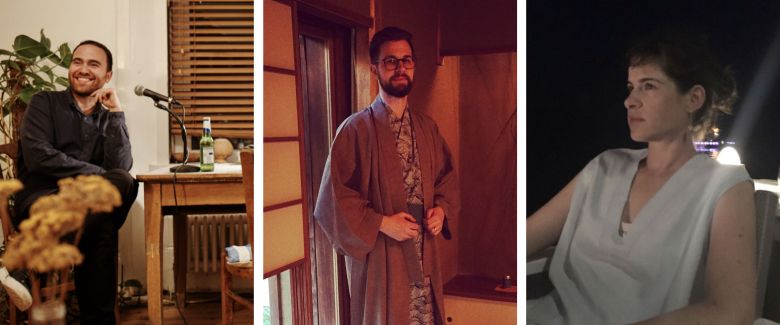
Five years after our last catchup, Music Ally sat down with Tim, Toby and Lilas Bourboulon – the three partners running Transgressive – to talk about the company’s ethos and the lessons learned over those two decades.
‘We haven’t been given a rule book…’
“What attracted us together, I think, is the entrepreneurial ethos of: we haven’t been told how to do a music company. We haven’t been given a rule book. It was more like, okay, so we love music. How can we make it work? And how can we build something new?” says Bourboulon.
“We’ve built everything from scratch: being on the shop floor and shipping records to the post office and lugging massive bags of seven inches all the way up to now signing multi-album deals to starting a publishing company and a management company.”
Dischord Records, Constellation Records and Fugazi were among the influences that encouraged Transgressive in its independent path, as well as Nirvana and Steve Albini’s criticism of the traditional music industry.
“I love that band so much, and they were always very open about their conflicts and distrust. And Steve Albini was a big vocal person in that. So absorbing all the stuff and being a self-righteous person inherently made me think that everyone was a crook and out to get my friends in the bands, and to be honest, I wasn’t far off!” he smiles.
“What has been great about how the industry has fallen apart or developed over these 20 years, depending on how you look at it, is that a lot of the people that were more manipulative or in it for the wrong reasons have fallen away,” he continues.
“What we’re left with is broadly a group of very passionate people at every level of the industry who are looking to support bands and work more collaboratively with artists. I feel that at Transgressive we have been part of that change. We strive to do that daily.”
“What’s fucking hilarious is looking back and realising it’s two decades, because it feels like 20 minutes. It really does,” adds Toby L.
“The days are long, but the years are short!” nods Dellow.

‘We’re quite hopeful in seeing scenes bubble up’
Transgressive partnered with the Music Venue Trust for its 20th anniversary concerts last year, with attendees able to learn about the Trust’s work supporting grassroots venues.
“We wanted to highlight and illuminate not just the importance, but the essential nature of having these environments that people grow in, whether you’re the audience or the artists on the stage,” says Toby L.
“Post-Covid a lot of people have forgotten about the power of being together in those spaces. There are less club nights than there were at that time [when Transgressive started] in London. You could literally go out any night of the week, Monday through Sunday, and there’d be at least three or four essential alternative-leaning music nights. Now that is not the case.”
“Scenes are non-existent in capital cities. That’s basically because venues are closing down and everything’s more expensive. A pint is more expensive. So if you’re a student, it’s just quite impractical for you to go out,” adds Bourboulon.
“But we’re quite hopeful in seeing scenes bubble up outside of capital cities. Like in the UK on the south coast there are amazing scenes going on in Brighton and Hastings, also up north and in other parts of the UK. So there’s hope.”
“It’s really important to keep striving: getting people to clubs and dancing and being silly and just, you know, encouraging a new generation of people who will then go to festivals and have this instinctive engagement with music from the age when you like to party most.”
‘We’re polyamorous when it comes to partners’
Transgressive prides itself on having long-term relationships with its various partners, built on trust earned over the years.
“It’s about making sure that you have integrity with yourself and your team, and that you’re being respectful of any external partners,” says Dellow. “And acknowledging the fact that there’s going to be good times and maybe harder times across those relationships, and to try to ride them out for a long-term situation.”
“We have this running joke that we’re polyamorous when it comes to partners,” adds Bourboulon. “We work with lots of different people and companies, and that’s because in every company and business model, there are brilliant people, so we’re quite agnostic when it comes to who we work with.”
“There’s one thing that always makes decisions easy: it’s that the artist comes first. So whatever’s in the best interest of the artist, that’s the first thing that we share with prospective partners. If we see we can together build towards that goal, that that’s a yes for us. But if things don’t work out, we never keep any bad blood. Our door is always open,” she continues.
Dellow notes that Transgressive avoids “big locking-in deals” in favour of agreements that incorporate regular reviews to make sure both sides are happy.
“Even if you’re in a marriage with someone, it’s a choice every single day to be with that person, and no one is controlling either side,” he says.
‘International is absolutely essential’
In the past, Transgressive has worked with a major label’s distribution arm internationally, but the model didn’t quite work out for it.
“We were promised a great international setup, but in those big systems, the way they are set up isn’t really to release local products internationally, and we struggled really, really hard to get anyone to give a shit about our local records outside that system,” says Dellow.
“That’s something we’ve put a massive focus on since, and I really think we’re amongst the best at doing that now: making sure there is dedication and passion for our releases in every market.”
“We never put all our eggs in one basket, so international is absolutely essential for the survival of artists, and therefore us,” adds Bourboulon.
“We’re seeing streaming revenue plateau in developed markets, and it’s actually increasing in emerging markets, which is very exciting for us. And it doesn’t mean we need to now think ‘Oh shit, we need to internationalise our campaigns!’ because we’ve always been very globally focused.”
Transgressive is also viewing the industry’s current hype around superfans with a degree of scepticism.
“We’re long-term: it’s about an artist’s career, and that means audience development. We’re much more interested in the long-term fan than we are a ‘superfan’ who we can just squeeze money out of,” says Bourboulon.
“Endless pockets [of fans] during the cost-of-living crisis?” adds Toby L. “That’s foolish shit, as always. Honestly…”
‘There isn’t a skeleton-key to success’
Transgressive has attracted a succession of high-quality artists over the past decade. Is there a secret to its appeal?
“Because we’re fucking legends!” jokes Toby L, to much mirth from his partners.
“Because we listen a lot to what an artist is trying to achieve, what other artists they admire, what inspires them, and what success means to them,” says Bourboulon, once the laughter has died down.
“And then we try to start a project together, as opposed to being ‘oh well, this is what we do’ and fitting them into a system. We’ve never worked like that: everything is started from scratch. We meet an artist, we get to know each other, then we get to build together.”
“We do dream big with our artists, but equally we don’t over-promise. There isn’t a skeleton-key to success. The zeitgeist and success are completely outside of anyone’s control,” says Toby L.
“But we are really keen on problem-solving and coming up with big, creative approaches to putting art out in inventive and exciting ways. Hopefully that contagious energy we muster up with the artists is then infectious to other people.”
Bourboulon takes up the thread. “We don’t look at data-sheets and decide: huh, that’s the signing to do! We listen, and we’re moved by art. If something moves us collectively, and we think it can move other people, that’s when we decide to move ahead.”
“You can’t de-risk this industry”
‘People are trying to buy safe bets’
This is a key part of Transgressive’s ethos: relying on their people’s gut instincts about music rather than going too deep down the analytics rabbit-hole when it comes to deciding which musicians to work with.
“The last two things we signed, one of them doesn’t have any music out, so there’s no data on it, and the other one has 1,800 monthly listeners on Spotify on some early singles that they’ve they’ve done independently,” says Dellow.
“That, for us, just doesn’t even factor, because it’s our job to bring people to the music, and the artists themselves are genius, so it’ll be great.”
“There is definitely a bit of a trend at the moment, probably because the industry is shifting again, that people are trying to buy safe bets,” adds Toby L. “I just think that’s foolish. You need to use your ears to hear the good music and back that.”
This is not to say Transgressive shuns data. Toby talks about how useful it can be when deciding which countries to send artists to on tour, or how to reach wider audiences with an affinity for a particular release or artist.
“But the idea of choosing creative and A&R decisions via data? If we’re going to end up like that as an industry, then thanks very much and see you later. It should be about the heart and soul and emotion of the human condition, both from the artist creating it and the people listening to it,” he says.
“You can’t de-risk this industry. It’s about music, and no one knows what’s going to connect or be the biggest hit,” agrees Dellow. “You just have to follow that gut feeling then work to make it happen. Not just try and sign something with a load of ears on it immediately, because the horse has bolted.”
“We sign people because we’re the right home, not because we’re the highest bidder,” adds Bourboulon.
‘Remain passionate, don’t get bitter’
The interview finishes with some advice for independent music companies at the start of their journeys in the industry.
“Don’t just do stuff because other people are doing it. You’ve got to curate your own version of what a brilliant company will do and can do,” says Toby L.
“And don’t be perturbed by nos. You’re going to get 15 nos before the eventual yes, and you can take those nos as an opportunity to refine your approach and maybe find other solutions. And remain passionate, don’t get bitter. Bitterness infects a lot of great companies,” he continues.
“People get despondent about change or things they can’t control. But you can’t focus on that. You need to focus on the inroads you’re creating and the opportunities you are making. If you fixate on all the things that aren’t happening, you burn out quickly.”
“Remain romantic. Work really fucking hard. Don’t be entitled. And good shit will eventually happen.”