



Eamonn Forde Meets… – each month, the veteran music business journalist speaks to a senior industry figure about the topics that really matter – and gets the opinions of the people who make the decisions that count.
January 2025: Isabel Garvey, COO of Warner Music UK. The success exposition: in the age of LPs and CDs, that mystical era from the closing century of the previous millennium, if your album went to number 1 on the charts, that was the apex of success. It was a visible and, crucially, centralised definition of success. Everyone knew (and agreed upon) what it was and what it represented. Today, however, success has to be measured in different ways, some concurrent and some disconnected. For the major label, the existential question arises: if success is not one single thing, which combinations of the multiple iterations of success now pass muster?
Garvey talks about what “success” is and what it isn’t in 2025, how long “unsuccess” will be tolerated for, how failure now manifests itself (as well as what steps to mitigate against it can be taken) and why creative success and commercial success can run at very different velocities, but only for so long.
In the twentieth century, “success” was relatively easy to define for a major record company. Did the album get to number 1 (or in the top five at the very least) in multiple markets? Did the new album sell significantly more than the last album? If so, it was bonuses all round. That model worked beautifully. Until it didn’t.
Today, defining success is more… amorphous.
Isabel Garvey has been COO of Warner Music UK since May 2023, having previously been MD of Abbey Road Studios (owned by Universal Music Group). Going from where records are crafted to where hits and success have to be minted marks a creative shift, a business shift and a cultural shift.
What shape that success takes, however, depends on your expectations, your scale of investment and what angle you are looking at it all from.
“Success is very different in the world we live in today – or the metrics of success are different,” says Garvey. “An artist’s definition of what success looks like can vary as well.”
Under the ownership of Edgar Bronfman Jr (from 2004 to early 2012), the focus at Warner Music was around multiple-rights deals (or, ideally, 360-degree deals), in a large part a spread bet response to cratering CD sales. That era, says Garvey, is firmly in the past for Warner, outside of a handful of smaller markets. “There is no prerequisite that you must sign up to these things,” she says of current artist contracts. The focus is on recorded music revenues, although that can include partnering on D2C.
As a concept and a process, success necessitates risk. The scale of that risk, however, will be characteristically different with each signing. Data sets, from social media to SoundCloud/YouTube streams, can be drawn on from the earliest stages of an act’s career to (partially) de-risk a singing, with Warner also able to hothouse acts via ADA.
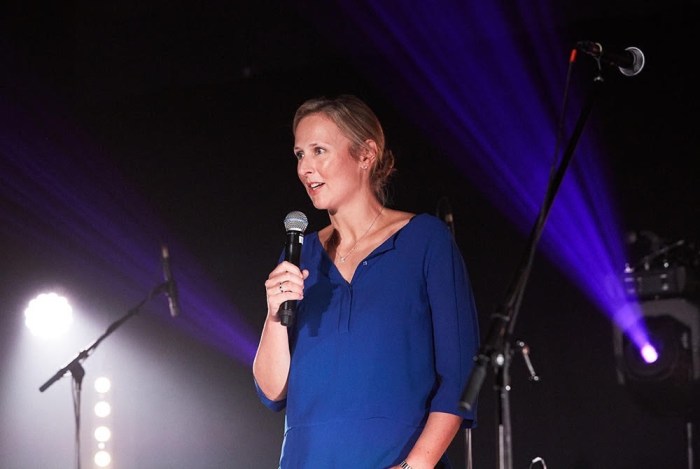
Music-driven signings
“The reality is we probably pick up artists at a lot of different phases,” says Garvey of how acts are signed at Warner. “I can think of a couple of signings we did this year that are super early stage and there are no followers of social media. They are very music-driven signings. Then there are artists where you can see the bubblings of social media picking up on a song or on the artists themselves. And then there’s the signing frenzy around these artists.”
She says that acts must be backed in the long term as the build is longer and harder. Charli XCX, with Brat, is a solid example of that, taking six albums before hitting the mainstream (or what we understand as the mainstream now).

“We’re investing [in acts] at the same rate, if not more, because the media environment and the media landscape is so changed,” she says, arguing the acts can run at a loss for longer than in more impatient times in the past – all in the hope or belief that success is coming. “I think we tolerate the red for a long time.”
She points to Fred Again.. as an act that might not have one of the key success metrics of the past (major chart hits). “But he is streaming incredibly well, building a hugely engaged listener base and selling out stadiums around the world.”
She adds, “We’re investing for the longer term, so we will stick with things. Charli is on album six now. We’re really sticking with artists. It’s not: ‘That didn’t work – goodbye.’ The whole point of A&R is to pivot. We saw some shoots of success here, so let’s pivot towards that and let’s grow that audience.”
UK music in a global market
The apotheosis of success in the past, certainly for British acts, was to not just break America but to be a truly global success. The UK’s music export power was second only to the US, but the world is markedly more international in its pop successes (Latin America, South Korea, Nigeria, Japan) and it is far from a given that UK acts now export on this scale.
Garvey asks: “When you look at the UK market over the last five or six years, who has truly broken out at the superstar level? Lewis Capaldi might have been the last one. Or Dua Lipa.”

Against that, she says Warner is “developing a different kind of artist” and, as such, they have to be measured against a different kind of success.
“[Take] Charli XCX or Fred Again.. – they’re cultural icons,” she proposes. “They’re zeitgeisty, they’re really connected to culture and fandom. Are they ever going to go, as we would hope they go, to Ed [Sheeran] and Dua levels? We continue to invest as if they will, but they are really interesting versions of what future stars can look like. They just build in a different way, because they have a much more solid base.”
For certain audiences, certainly those gorging on short-form content on TikTok and YouTube Shorts, success is more conditional and more fleeting. Success is not even a song connecting, it is a hook connecting. But successful careers need more than a single hook to happen.
“We’re all about building artists and not songs,” says Garvey. “You could have these songs that just catapult on social media. They have weeks and weeks and weeks in the OCC chart or the streaming charts. But then what? Benson Boone’s a good example. He absolutely flew up with ‘Beautiful Things’. Or Teddy Swims as well. But they have several other songs behind them that have performed really well. We’re trying to build a profile and convert that kind of fandom. Social media breeds fandom of a song. How do you convert that fandom into fandom of the artist and take them on a journey?”
“A failure is just a failure to connect”
The inverse of success, of course, is failure. How does Warner know when something is failing, or realise that they cannot pull out of the financial nosedive?
“A failure is just a failure to connect,” says Garvey, explaining that each release or project has to, at the bare minimum, show signs of growth.
“[The signings] in the red with way too many zeros against them are the ones that are really challenging,” she explains. “Our job is to stick with an artist, even though, financially, it might not look very pretty for a CFO; but we can see that the audience is growing, that their live is growing, that this has traction. We will stick with it to grow it. But if those stagnate, that’s where we have to question whether or not this is something to keep investing in.”
For the label, to distill it down to its harsh fundamentals, financial success is the ultimate success. For artists, ideally creative success and financial success intertwine: the former should always be the primary goal but it cannot run unchecked forever without the eventual realisation, as measured by label CFOs, of the latter.
“We’re all about building artists and not songs”
“It’s a really collaborative relationship,” says Garvey of the artist/label dynamic “They actually define what success looks like between the label and the artist themselves. It’s really open communication, reacting to whatever is happening, having plans, both in the long term and in the near term, of what needs to happen to drive whatever they’ve defined as a success. It’s not a dictatorial relationship from label to manager or manager to label. Because the world is so fragmented, we really have to graft together and have a shared vision of what’s going to happen.”
The success metrics might be different today and the growth trajectory might last longer or even take a more circuitous route.
For labels and artists, the very shape of success used to be measured out in platinum discs. In 2025, the shape of success, and the staying power of success, is no longer as identifiably symmetrical.