
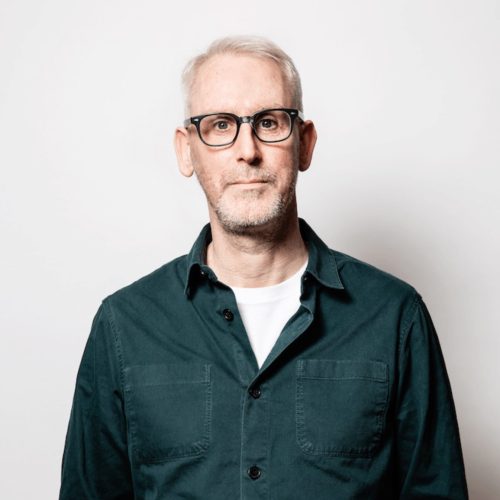
Eamonn Forde Meets… – each month, the veteran music business journalist speaks to a senior industry figure about the topics that really matter – and gets the opinions of the people who make the decisions that count.
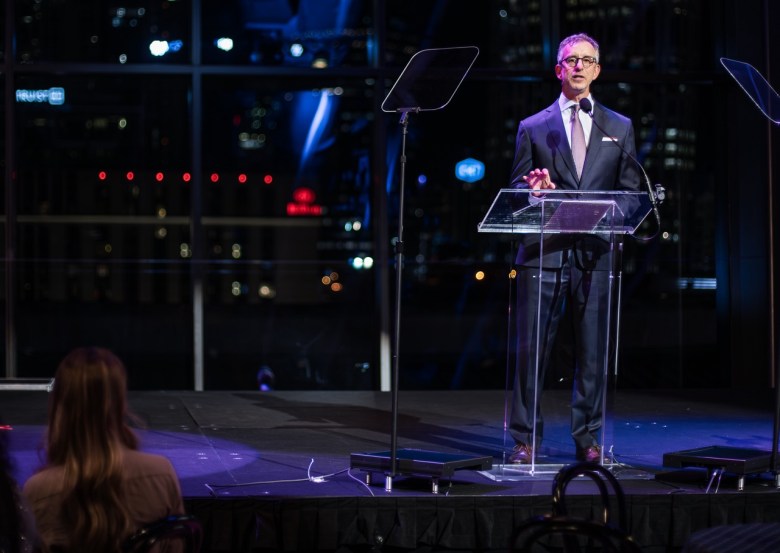
March 2024: David Israelite, President & CEO of the National Music Publishers’ Association. He talks about where songwriters are pushed to the margin as recording artists take centre stage in licensing debates and revenue splits, what is happening with the Twitter/X lawsuit and why the subscription market can absolutely take more price increases.
All hell has been breaking loose in recent weeks between Universal Music Group and TikTok over licensing rights, royalty rates and which side needs the other the most. The fight, argues David Israelite of the NMPA, has predominantly been viewed through the lens of the recording artist rather than the lens of the songwriter. As such, it reveals a pernicious “bias” in the music industry where publishing, the primary right, is treated as a secondary concern.
He diplomatically says he cannot comment on the specifics of the UMG/TikTok impasse, beyond pointing out that it is being framed in the wrong way.
“When Universal’s record arm removed its sound recordings from TikTok about a month ago, there was not a single mention of how it might impact songwriters that are not at Universal or who wrote songs recorded by Universal artists,” he says. “Now, a month later, when Universal Music Publishing is removing its rights from TikTok, because they were in a different contractual term, you see all of this discussion about the [recording] artists who will be impacted by the removal of the Universal songs.”
This is all, he feels, back to front.

He tells Music Ally that the licence agreement NMPA’s members have with TikTok expires at the end of April and, ahead of that deadline arriving, he is keen to shift the industry debate more deeply into music publishing rights.
“It is exposing a massive bias that exists in the music industry, with licensees like TikTok and even with the press in terms of somehow not thinking that songwriter rights are equal to the artist rights,” he says. “That bothers me.”
He feels that this insidiously maps across into how songwriters are being doubly screwed over in the streaming age: recording artists are prioritised over songwriters in moral/ethical debates; and labels are prioritised over publishers in revenue debates.
“With regard to TikTok, there’s a general feeling that the amount of money paid for music overall is not enough,” he insists. “Then it’s a separate question of how that money gets divided between the songwriter contribution versus the recording artist contribution.”
What UMG/TikTok reveals is history repeating itself first as tragedy and then as farce, where the same mistakes are repeatedly made. We have been here before with licensing disputes around MySpace, YouTube, Spotify, SoundCloud and Instagram; but perhaps all the public fights, all the sabre rattling and all the open letters are a necessary part of shunting standoffs towards resolutions.
“It is exposing a massive bias that exists in the music industry”
David Israelite
“It does feel like Groundhog Day,” sighs Israelite. “What YouTube and many other social media-type platforms discovered over time was that music was extremely important to their business model and, as their business model changes, oftentimes they need the music industry to be their partner […] I would hope that TikTok comes to the realisation of just how important music is to the platform. But maybe it needs to play out in this way.”
I ask him about the NMPA-led lawsuit against Twitter/X that erupted last summer but has gone quiet since the latter moved in August to try and have the lawsuit dismissed.
He notes that “this is the normal flow of a litigation in a federal court of this nature” but says the NMPA is waiting on the final resolution of the motion to dismiss (“Which I am confident we will win”) before they can get into the real meat of the litigation – the process of discovery. No deadline has been set for this, but reading between the lines the court showdown could be imminent.
One of the fundamental issues underscoring many of these debates and legal actions, and this is something specific to the US, is that labels’ rates with digital services are negotiated in the open market whereas for publishers the rates are set by government (as seen with Phonorecords III and IV, which is helping to boost publisher income). That critical difference, Israelite believes, has a deleterious knock-on effect for a general devaluation of songwriting rights in the wider industry discourse.
“What I think is unfair in the United States is so often that we’re not competing under the same rules,” he says. “We have different rules for setting prices for songwriters and therefore the market is not reflecting those relative contributions in terms of inputs and risk.”
“We’re not in a free market where we can negotiate our rights with regard to pricing”
David Israelite
He does say, however, that the most immediate win for the whole music industry here is for streaming subscription prices to keep increasing.
“Under the current rate agreement that we have with the digital companies, we’re very much tied together and where we’re partners – where their economic success becomes our economic success,” he says. Price increases have, he asserts, only benefited the market and he is confident it can sustain further rises.
“I get information every month from every service – so I can track subscriber numbers in real time when you see any price increases,” he says. “Our data concludes definitively that the price increases we’ve seen so far have had no negative impact on subscriptions. In fact, you continue to see subscription growth. So we believe that prices should go up. However, unlike record labels, we don’t get to be part of that conversation. We’re not in a free market where we can negotiate our rights with regard to pricing. We’re just told by the government what those prices will be. And now we have to hope that the digital services do the best they can in getting more revenue.”
If UMG/TikTok is resolved in the coming days/weeks, that could make NMPA’s renegotiation discussions in April much easier. If it is not resolved, NMPA’s discussions could become a lot more explosive. Perhaps not as explosive as the Twitter/X lawsuit could prove to be, but Israelite will be keen to have publishing rights and revenues lead the discussion, not be left to flounder in its slipstream.