


Guest column: Music Ally publishes guest columns voicing the opinions of notable authors, or advancing specific perspectives on important issues. These are chosen at the Editorial team’s discretion, are not paid-for, and do not necessarily reflect Music Ally’s own opinion. You can read our guest column policy here, and the guest column archive here.
This guest post is by Tom Russell and Y’akoto, co-founders of Afroson1c X.
In Accra this January, one conversation kept repeating itself: with the huge popularity of Afrobeats, are we doing enough to promote African artists and create the conditions for their development?
Ghana and West Africa sit at the centre of one of the most exciting cultural waves. According to the International Federation of the Phonographic Industry (IFPI), Sub-Saharan Africa – including West Africa – was the second fastest-growing recorded music market globally in 2024. Artists such as Rema, Tems, Burna Boy and Wizkid have helped focus global attention on the region, but West African music is more than the success stories of its most recognised faces.
As Ghana-based music professionals ourselves, we see first-hand the opportunity that lies in the region. West Africa is home to more than 470 million people, and counts on a rapidly expanding digital ecosystem and a new generation of ambitious founders and music executives. The region is meeting the conditions to become one of the most dynamic music markets. Yet growth alone is not enough. Right now, the flow of West African music and talent is growing faster than its systems, and that’s problematic.
How do we build a fairer bridge between African creators and the global music industry, one that doesn’t extract value, but multiplies it?
To answer that, we began by listening. We spoke with artists, managers, producers and executives across the region to understand their everyday challenges. The conclusion was clear: talent is not the issue; the lack of a proper music ecosystem is.
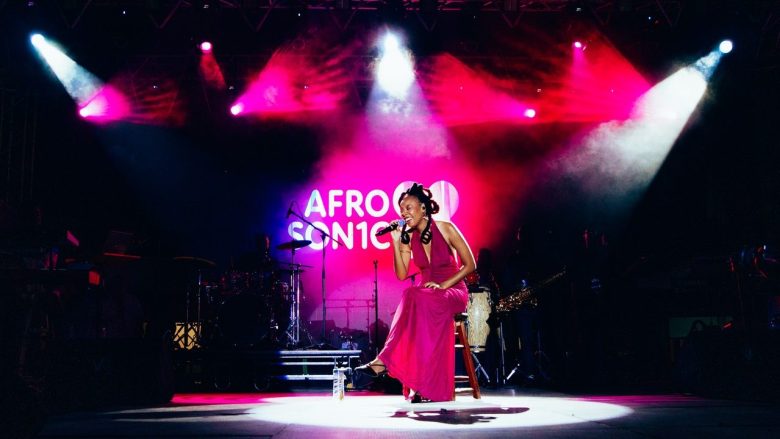
Afroson1c X was our response. We built it as a platform to help creatives and industry professionals in West Africa overcome the obstacles that are preventing them to have long-term careers.
The growing pains of a fast-moving ecosystem
Working between the UK, Europe and Ghana has made it obvious to us that African music is scaling globally, but without the underlying infrastructure to sustain that growth.
In our view, six structural factors are weakening the wider African music ecosystem, and leaving local artists with inconsistent, fragmented incomes:
1. The music streaming average revenue per user (ARPU) in Sub-Saharan Africa remains significantly lower than in more developed regions, such as North America or Europe.
Streaming subscription prices are often reduced to reflect local purchasing power. In Nigeria, for example, premium subscriptions can be as low as $1–$2 per month, compared to $10+ in the US or UK. In addition, a large share of consumption sits on ad-supported tiers or is bundled into telecom data plans, where music is included at heavily discounted rates. While this has driven rapid user growth, it has also diluted per user revenue, meaning that even high streaming volumes do not translate into meaningful income for most artists.
Based on industry benchmarks, one million streams can translate into approximately $2,000–$4,000 globally – but when a significant portion of those streams come from lower ARPU markets, the effective payout can be materially lower.
2. Alternative revenue streams – publishing, sync and neighbouring rights – are also underdeveloped or inaccessible due to gaps in rights registration and collection infrastructure. As a result, total earnings remain fragmented and unpredictable, even when audience reach is growing.
3. The live music sector is limited to a handful of cities. While Lagos and Accra have a growing number of venues and promoters, infrastructure beyond these hubs remains limited. In practical terms, an artist can perform in a handful of major urban centres but cannot build a consistent regional touring circuit of mid-sized venues and promoters across West Africa to develop audiences over time. The absence of this touring layer restricts both income and artist development, contributing to careers that peak quickly without long-term sustainability.
We anticipate continued growth in the live music sector, driven in part by the increasing use of AI-enabled tools that make music more accessible, immediate, and widely consumed. As a result, the value of real artists who can translate their recordings into compelling live experiences will only intensify. These artists require meaningful platforms to showcase their work.
4. Lack of funding remains a considerable challenge. Unlike in Europe or North America, where advances, grants and institutional funding support emerging talent, many African artists are self-funded. This leads to short-term decision-making, where artists prioritise immediate visibility over long-term career building.
5. Access to high-quality education about the music business is also affecting career development. Across Ghana, Nigeria and other countries, opportunities to learn about publishing, rights management, touring strategy and long-term career development remain limited, fragmented or informal.
6. Finally, there is a narrative and perception challenge. Many African artists only gain recognition locally after success in the US or Europe, reinforcing a system where value is exported before it is retained. When these artists go abroad, they find that African music continues to be broadly categorised under “Afrobeats,” despite the region producing a wide spectrum of genres – from alternative and electronic to soul, hip-hop and experimental sounds. This oversimplification limits both artistic identity and commercial potential.
Taken together, these challenges point to a common issue. What is missing is not talent, nor ambition. It is infrastructure: systems, education, funding and networks that allow artists and companies to build sustainable careers over time.
Building sustainable growth from within Africa
In January, we launched the first Afroson1c X festival and industry conference in Accra, Ghana. Building on earlier international showcases at SXSW London and Reeperbahn Festival, we felt it was time to create Ghana’s first live music and industry platform, bringing together performances, education and business under one roof.
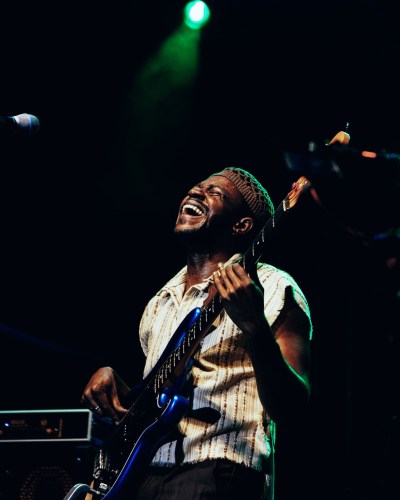
The festival sold out, proving that there is real demand for structured, intentional platforms in Ghana, and that the live music culture here is ready to grow.
The presence of senior executives from the UK, Germany, Sweden, the USA and beyond sent a strong message: Africa is no longer being watched as a future opportunity; it is a present strategic priority for the global music business.
Sustaining that international interest, however, must begin from within. We must build reliable live circuits, improve transparency in rights management, increase access to funding, and invest in professional education. The region needs platforms that are globally connected but locally grounded, with spaces where African artists and executives meet international partners as equals.
Afroson1c X is only a first step and we are proud of what we have accomplished with this first edition. We are convinced that the next chapter of West African music must be built on strong, durable systems that allow talent to succeed at home and compete anywhere in the world.