

Team Talk is Music Ally’s interview series, where our marketing experts speak to music industry teams about their latest work, best practices, and smart strategies. You can find the archive here.
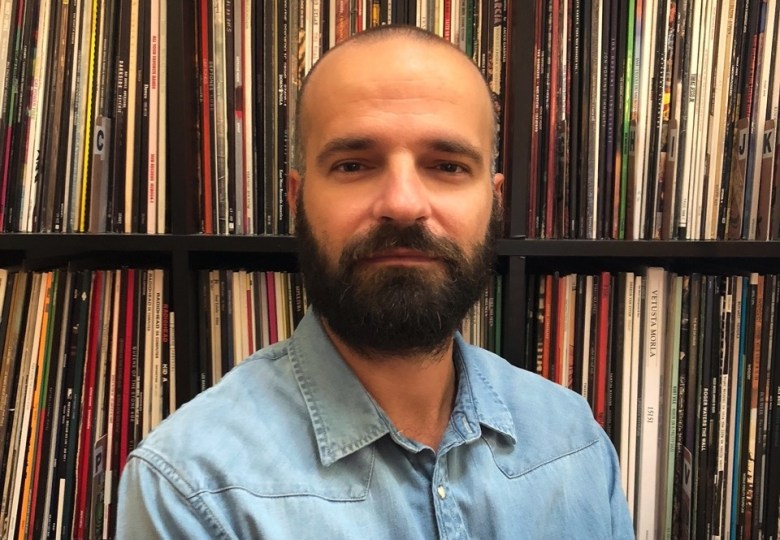
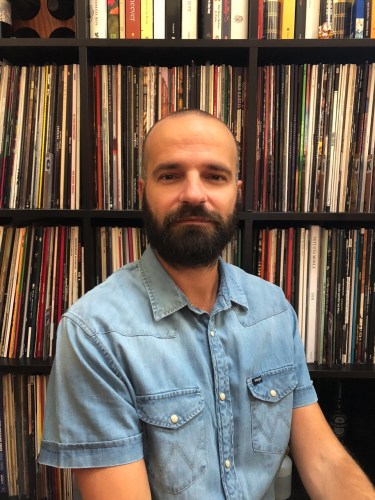
Maxime Dodinet is the former head of digital marketing at Sony Music Spain. He’s now established in the UK helping labels and artists with their digital strategy. He talked to Music Ally’s Juliana Ortiz about marketing trends there, including the influence of reggaeton and other Latin music, as well as where Spanish artists could be doing more on social media to grow their audiences.
Juliana Ortiz: What, in your professional experience, are the biggest digital platforms for young people in Spain to discover and consume music?
Maxime Dodinet: I’ve lived in the period when you didn’t have music as a library on Instagram, on Facebook. There was no TikTok. It was completely different! So the emergence of licensing agreements with platforms like Instagram and Meta in general definitely helps us to grow awareness and visibility around artists and their music.
TikTok has definitely been a game changer. I’m not telling you something very new here, but now the younger generation discover music through maybe 15 or 30 second clips. We used to discover it maybe because we read about it in an article in a magazine, or we heard a song on the radio.
The new generation, they don’t discover a complete song. They start from short-form. It is hugely powerful in Spain and in the other Spanish-speaking communities, because it gets to so many people. The opportunity to connect people with your song is almost endless, because of so many people speaking the same language.
Juliana Ortiz: Is there a specific platform where Spanish-speaking music is particularly strong? TikTok, for example?
Maxime Dodinet: Completely. TikTok was really focused on dance challenges up to a couple of years ago. Even if the platform doesn’t want to push this kind of content, that’s a reality. Lots of big Latin and reggaeton hits were made because of organic trends on the platform. We have dozens of examples.
It’s switching now, but the basis of how successful these genres have been on the platform has definitely been short formats, dance challenges, and this opportunity to speak to tens of millions of people at the same time because of the language.
I can also mention Twitch. For us, it’s paying. Again, we come back to the community. The community is so huge. When you are a successful streamer in Spain, it means you are a successful streamer in Argentina, in Mexico, in Miami, in Los Angeles…
The biggest streamers in the world are in Spain. They’re in Spain but they talk to, and they always refer to, Spanish-speaking communities. They’re conscious of the fact that it’s a Spanish-speaking community, so they don’t talk to Spain: they talk to a whole continent. They start their streaming sessions at eight o’clock [PM], so they take care of the people in Latin America as well as the streaming prime-time in Spain.
And they’re young: they like music. The most successful ones are urban, reggaeton-oriented, so it’s been a platform that gave a lot of visibility to the artists through video reactions.

For example, Bizarrap. Every time he releases a song, it’s a big event for the Twitch community. Everyone is going to react live when the song is released. If a song is released at midnight, at 12.01 all the biggest streamers from the Spanish community are going to do a video reaction.
They’re going to share their screen, they’re going to show the YouTube channel of Bizarrap, and they’re going to react live and direct to the new song. And then they share this piece of content on YouTube, and then it goes on Twitter and Instagram and TikTok. So it starts from a platform like Twitch, but then that’s the starting point for a big diffusion of content on all the other platforms.
You can find some Bizarrap video reactions with tens of millions of views. People are waiting for those streamers’ reactions. So it’s definitely a trend, and people discover the new video alongside the streamers, then they will listen to it on Spotify and watch the video clip on YouTube.
Juliana Ortiz: What has the impact of this been on Spanish artists? If more of them are making reggaeton-influenced music, are they also keeping their Spanish identity?
Maxime Dodinet: Pop artists may do reggaeton-inspired songs, but only musically speaking because of the rhythm. The lyrics would still be the lyrics that they would do normally. The lyrics were still very Spanish. We can’t do some República Dominicana or Puerto Rico lyrics here in Spain. It wouldn’t work!
But the new generation, Gen-Z, is very interesting in Spain. Very fluid. They have some lyrics that are maybe closer to the reality of their generation. But the appearance of artists like Rosalía and C. Tangana was definitely a turning point.
Those two artists have made people believe that you can be Spanish and you can be successful globally. You don’t have to sing in English to have success. You can conserve your identity, maybe take from here and there, but also be successful. And now I believe that Spanish music has more credibility than ever.
Juliana Ortiz: Do Spanish artists still face challenges reaching the same level of international success as the big Latin American artists? Is it harder for them?
Maxime Dodinet: That’s a very good question. Maybe there is a space for not so many artists on a global level. So maybe we struggle a bit more, even if we have this shared language and the talent. Maybe it’s also a question of the muscle that companies put to promote [Latin American] artists like Karol G and Manuel Turizo on a regional and global level almost right from the start.
10 years ago, people from Latin America who were quickly signed in Miami, they knew that they had to be very productive. You release 20 songs, maybe you will get three hits. If you release one song, you don’t know if you have a hit or not. It is something that is now changing in Spain.
I truly believe that if you release more songs, if you’re more productive… you don’t have to think any more about one album every three years, and you have more opportunity to be successful. I believe that’s what Latin American artists have been doing so well.
Spanish artists also still struggle to be on social media. They don’t want to be on social media, even if they’re 21 years old! They should be digital natives. They should completely understand TikTok: how it works, how to relate with the platform. But it’s a pain for them.
The difference with Latin American artists and managers is that they knew from scratch that they needed some digital teams in their structure. That’s what we don’t have here in Spain. We don’t have digital people: community managers, creators, people who have the ability to create some content from inside the team.
[Colombian artist] Manuel Turizo, for example. He always has someone recording whatever he does, so they are always creating some content in order to get more awareness. The issue that we have now with Spanish artists: they understand the importance of TikTok, but maybe they would only use their official sound once and see what happens. Artists from Latin America, they understand that if they have to use the song 20 times, they’re going to use it 20 times. And it definitely makes a difference!
It’s definitely an effort for Spanish artists to be on social media. And it shouldn’t be an effort. We understand that we are asking a lot of artists in general now. Much more than producing some good content, some good songs. But if you want to cut through the noise you have to have a social media presence, and not abandon your community after you release one song.
The strength of Latin American artists like Maluma, like Karol G, like Manuel Turizo, is that every day they create some content. We can’t expect an artist to produce content on their own every day. They have to be surrounded by a team that can go alongside them and help them produce content.
Rosalía does that from a very organic standpoint. It feels very fresh. She’s one of the best case studies we have: she does that incredibly. It’s natural for her. But if it’s not natural for you, and you don’t surround yourself with a team that can help you, it’s very hard to get more visibility to grow your audience on social media.