


Team Talk is Music Ally’s interview series, where our marketing experts speak to music industry teams about their latest work, best practices, and smart strategies. You can find the archive here.
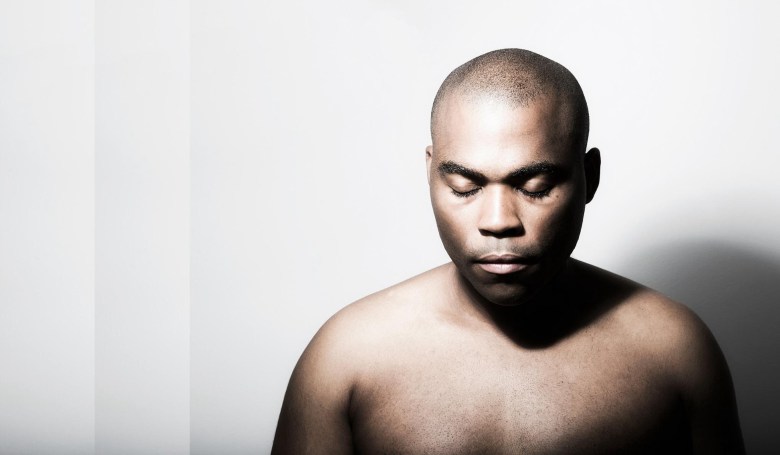
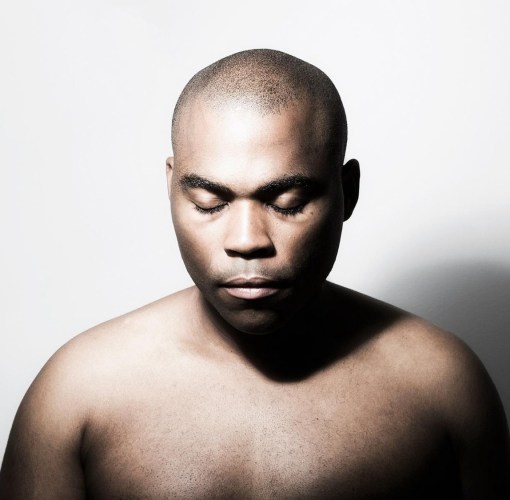
Sean Bradford is an artist, DJ, and founder of Origin Støries, a creative studio that makes “custom AI-powered tools for co-created experiences.” The company has created a number of interactive and innovative activations for music events, and Music Ally’s Sarah Seukeran spoke to Sean about his work, and the use of AI and other technologies in the live space.
Sarah Seukeran: I’m curious of your take on how AI is being used in the industry right now and your general thoughts on it as a technology.
Sean Bradford: I went to a coding conference and in one of the talks, a woman re-emphasised that what we’re doing is machine learning. It’s not artificial intelligence, but a subset of AI. But the word “AI” caught on – it’s the buzz trend, and so that’s what it is! And then there’s this idea that it’s “fake”: “artificial” means “fake” as a word, in general. So it’s already not leading with the best [description] of what it actually is.
I think how can it actually be interesting is the idea of human assisted collaboration.
The music and creative industry take is in two camps: you have two conflicting reasons of why you would use the technology – one is “can this actually help create some kind of shift which also provides things like efficiency to musicians or artists?” But then there’s this kind of, “okay, how can I use it to make more profit?”
And I think if we can have more collective workshop or educational experiences for the public, as they’re touching it, I think it will help demystify it in a way that makes it exciting and not abrasive.
Sarah Seukeran: It does sound like we’re barely scratching the surface of what can be done with AI – so what’s the ideal scenario of how we would be using AI in the future as a creative industry?
Sean Bradford: I think it can resolve some of the problems that exist and enhance the overall experience. Everyone’s competing for a very limited attention span, everyone’s trying to figure out how to create even more personal fan relationships … that becomes a revenue stream.
No-one even knows what is going to happen yet. There’s a DJ this weekend in Amsterdam, and he’s basically going to play back-to-back with an AI that’s been trained on his own music – and that’s a super-big thing. Because everyone is talking about how it’s going to make musicians obsolete – but someone who has a back catalogue and enough autonomy to make his own proprietary dataset trained on that can now play live sets.
He’s a creative and so he’s approaching the conversation in creative ways and I think that the ideal is that people are able to understand what it can do – and actually think about how it can solve problems in this really weird gray area of storytelling and personal relationships to fans.
Sarah Seukeran: How do you think that, in terms of bringing the the fans into that story, what does that actually looks like and – how is AI helping to do that?
Sean Bradford: I think there’s this middle ground of being able to bring a story to life – a song into a visual format. Pre-pandemic there was already this shift to cinematic music videos and making a short film: how can I extend a visual experience that is actually like helping to articulate what I’m what I’m trying to say or the or what I want you to feel?
It’s so expensive to make high quality visual content consistently over the course of your career – so I think anything that helps solve that burden, but also provides value is okay. It’s not just about “hey look at me and look at all the stuff I do, and here’s like a product” – it can ideally become more like, “hey, this is a world that you can also immerse yourself in.” And then there become opportunities to gamify that and also create ownership.
You can also have the the aspect of co-creating visuals for a show – and then allowing some sort of competition – and that can even become limited edition merchandise using generative AI that’s been collaborated on. So the fan is now an owner in the visual stake of the experience, plus they are potentially earning something from merch sales that they also contributed to.
I think it extends fan art in a different way: fan art is very much “I’m the fan and this is what I see you as” and it’s like there are two people telling [the artist’s] story. So [the artist] can become more part of it, if you want to, and AI allows for the artists to be able to do that more frequently.
Sarah Seukeran: Can you give me an example of how this could work?
Sean Bradford: My tech studio Origin Støries has a tool that works in “single-player mode”: so you can easily make visuals like images for social posts or video – and then there’s the “multiplayer version” which is for when you want others to make too. That’s done on a website with a live stream via Livepeer. We’ve done generators for different artists and we’re experimenting with Telegram and Discord for these really fast experiences. We’re testing with some DJs this idea of people creating the visuals through a very specific prompt [as they DJ.]
It’s like a mad science lab vibe! You ask the user three questions, and then they are able to put their own unique input into it and create this visual – but it’s in a structured world.
[In the future] it’s just going to show up everywhere. Shifts in these cultural moments that are a little bit more like micro, and maybe not that big, will mean that people actually start to understand and see how they could use AI like this. And then you can start adding maybe monetization and then I think that becomes this whole other omni-channel experience.