
Eamonn Forde Meets… – each month, the veteran music business journalist speaks to a senior industry figure about the topics that really matter – and gets the opinions of the people who make the decisions that count.
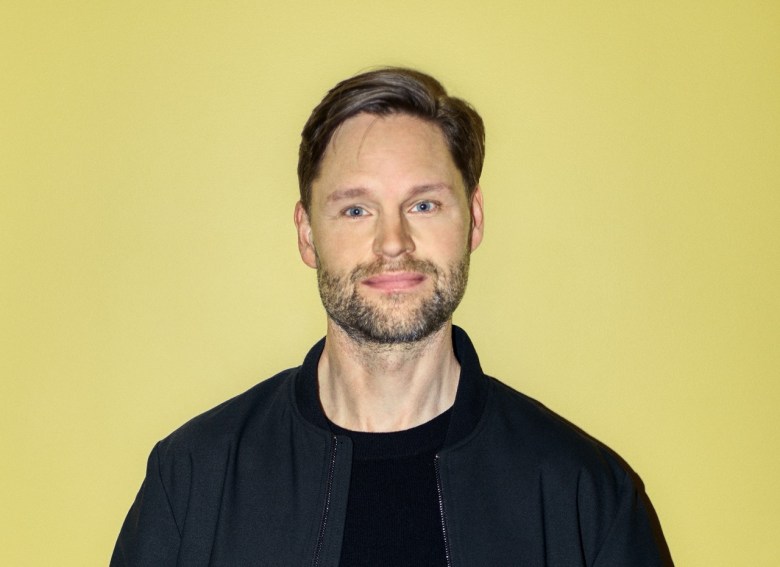
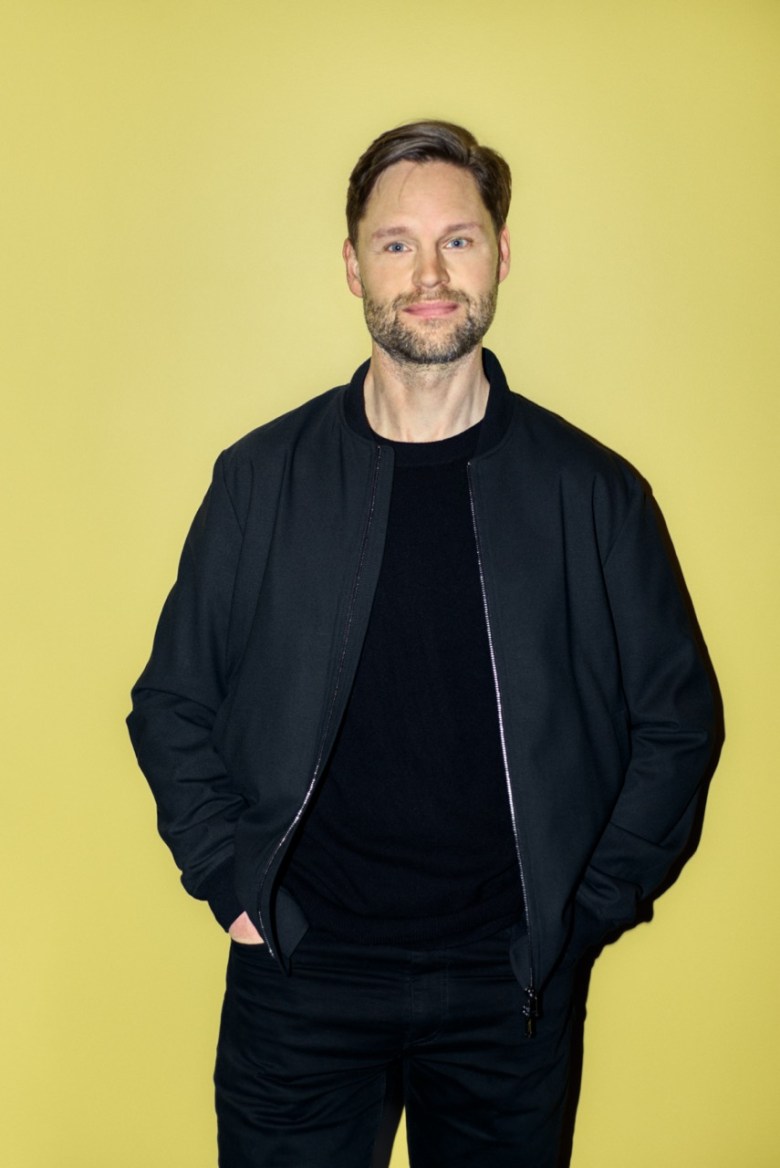
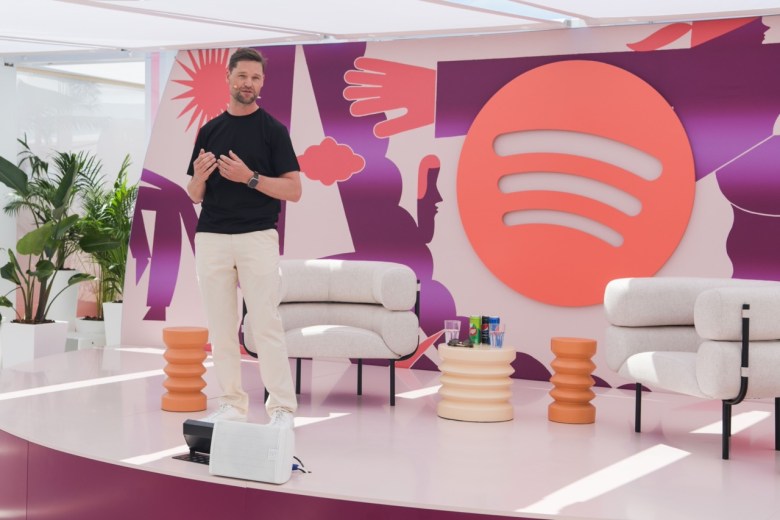
December 2024: Gustav Gyllenhammar, VP of markets & subscriptions at Spotify. The subscription prescription: Spotify has just hit another landmark, topping a quarter of a billion subscribers. With growing competition from Apple Music, Amazon, YouTube and more – and with growing demands from both labels and investors to keep its growth curve pointing firmly upwards – the subscription team at the streaming service has never been as successful or under as much pressure as they are now. A quarter of a billion subscribers felt like an impossibility two decades ago, but now growth ambitions are rapidly ratcheting up. The next quarter of a billion subscribers will be even harder to bring in.
Gyllenhammar talks about moving Spotify from 6 million subscribers to over 250 million in 11 years, how societal attitudes to all forms of subscription are changing, why free will remain critical to Spotify’s subscriber growth potential, where making free better will actually make Premium more desirable, and where the free/Premium tension is become more nuanced based on where in the world the audience is.
If you joined a company 11 years ago when they had 6 million subscribers and then helped take that company to over a quarter of a billion subscribers, you would be justified in putting your feet up for a while.
For Gustav Gyllenhammar, however, the retooled words of Justin Timberlake playing Sean Parker (fittingly an early investor in Spotify) in The Social Network might apply. “250 million subscribers isn’t cool. You know what’s cool? A billion subscribers.”
We speak just before Spotify announced its most recent numbers, where over 252 million people, across 180 markets, are now subscribing to the service. That includes standard subscriptions, student discounts, family deals and other “lite” versions in emerging markets (more of which below).
The success of Spotify did not happen in a bubble. Two decades ago – outside of mobile phones, broadband, magazines and cable/satellite TV – subscriptions were rare and the notion of subscribing to a music service felt like the very definition of niche. Arguably Netflix did the most to normalise subscriptions for home entertainment, now standing just ahead of Spotify with 282.7 million subscribers globally. But Spotify itself (regardless of the many, many arguments about devaluation of music and musician penury) significantly changed public attitudes about recurring subscriptions.
“We’ve had a very good year and it feels like all the energy we put into building a good and strong subscription business has really paid off,” says Gyllenhammar. “And we’ve seen, whether it’s a recession or a boom time out there in the world, feeling the worth of paying for Spotify seems like something that is resonating with consumers.”
It was, for a long time, an uphill struggle. Spotify co-founder and CEO Daniel Ek repeatedly said he wanted to “create a service that was better than piracy” and to swat down the multitude of free and unlicensed P2P services that were having a locust effect on record sales in the early 2000s. Napster and its offspring were quick to be embraced, but changing societal attitudes around that took much longer.
“Paying for digital goods was something that people just were not doing 10 or 15 years ago,” argues Gyllenhammar. “They were thinking that anything digital had zero cost of goods sold, so they should get it for free.”
Key to the rapid uptake of Spotify was its freemium approach, offering a free tier supported by ad income and steadily expanding what the premium tier included (from offline play to audiobooks, although that is not without controversy) to upsell users.
There have been calls to increase subscription prices for years and which Spotify has started to address (more below); but there are also questions about the viability of the free tier as the situation in 2024 is very different to “the war on free” in 2008. Gyllenhammar insists freemium has to remain a “hero strategy” at Spotify, pointing out that 60% of users start on free before upgrading to a paid subscription.
“For us to stay competitive, we still need to have a vibrant, accessible and free service,” he says. “But then we are putting most of our energy, especially for the Western markets in Europe and North America, into building a premium subscription service that people want to pay for.”
“Paying for digital goods was something that people just were not doing 10 or 15 years ago”
Free, however, is proving as much a breadcrumb trail as it is a bulwark for Spotify and its relationship with subscribers.
“Free is not just an on ramp into premium, as we’ve also seen that it has been a phenomenal retention tier for us,” he proposes. “People dip in and out of premium and the free service [works] as a backstop for those consumers; so they still have their playlists, they still have their experience. That has been one of the reasons why we have consistently been able to grow. If you have a premium-only service with no free, it means that when users churn out, you’re going to start seeing pressure on your overall userbase.”
He admits that raising subscription prices in mature markets was not always handled perfectly, saying “we didn’t keep up with inflation well enough”. But price rises in recent years have not spooked subscribers.
A balancing act between paid and free
When users do opt out, however, Spotify does quantitative and qualitative analysis into the reasons why and looks to see if they defect to a competitor or downgrade themselves to the free tier. “These are metrics and data that we look at very, very carefully to understand that people are not leaving us in favour of a competitor because they find better value elsewhere,” he says. “Those are things we’re very careful about.”
The balancing act between paid and free in more emerging markets, however, is very different to those in maturing Western markets. Gyllenhammar points to Premium Mini in India and Indonesia, capping the number of downloaded songs at 30 for offline play but at half the cost of the full Premium service.
“We’re currently testing a product in Colombia where we’re also selling a stripped-down version of Premium – where really we’re trying to address the mass market,” he says. “We think it’s primarily an opportunity for the emerging market regions of the world.”
He admits that Latin America was a difficult region for Spotify to crack in the early years of being active there.
“We were very concerned about the monetisation and we didn’t see conversion from free to paid,” he says. “But in tandem with the growth of content from Latin America, we’ve seen a phenomenal growth in subscriptions. The conversion rates in Latin America almost mirror those we see in the developed world. We have well north of 50 million subscribers there, and 20% of our global subscription business is in Latin America. No one thought that would be possible back in the late 2010s.”
The strategy in Asia is different again. When Spotify conducted research into what consumers there were willing to pay for, they said they wanted greater fandom elements and more access to artists. This resulted in more album listening parties targeted at the region and new features such as the K-pop ON! hub in Indonesia.
While Spotify is clamping down on the number of free trials it gives out and is better policing family subscriptions to ensure only genuine family members are added on, the free tier remains central to its offering and its growth strategy. Rather than make free “worse” in order to boost subscriptions, a counterintuitive logic reigns.
“The biggest thing that people might misconceive is that a good free service might be bad for subscriptions,” says Gyllenhammar. “But we’ve actually seen that any time we make the free service better, it actually leads to higher subscription growth over the mid-to-long-term. As users come into the platform, and if we retain them better and increase engagement when they’re a free user, they’re much more likely to pay and convert to Premium. So a good free service and a good Premium service go very much hand in hand. It’s not a dichotomy between the two. If we could make free worse, we’re actually going to see Premium perform worse over the mid-to-long-run as well, because we lose out on those consumers. That is probably the biggest single secret to Spotify.”
A lot further to go
A quarter of a billion subscribers is a hugely symbolic number, but Gyllenhammar is confident there is a lot further to go and a lot more ways to grow.
“No one thought that we could get to 100 million subscribers when we were at 5 million,” he says. “And we made that happen. Then we raised the bar and said: what if we could get all the way to a quarter of a billion? And now, as we’re there, I think it is time for us to figure out: what would it take to build a service that is loved by maybe half a billion users or a billion users globally? What do we need to add to the subscription bundle in our subscription service for that to be a reality? That’s what we’re setting our eyes on for the next couple of years, to see how we can stretch the imagination and the development of our service to become something like that.”
Hitting landmark targets is both a blessing and a curse. A blessing in that the subscription team will be the heroes of the sector for a while. A curse in that new, bolder targets will now be imposed. You achieved that? Well done, but how about achieving this? Time to switch out the hamster wheel for an even bigger one.