

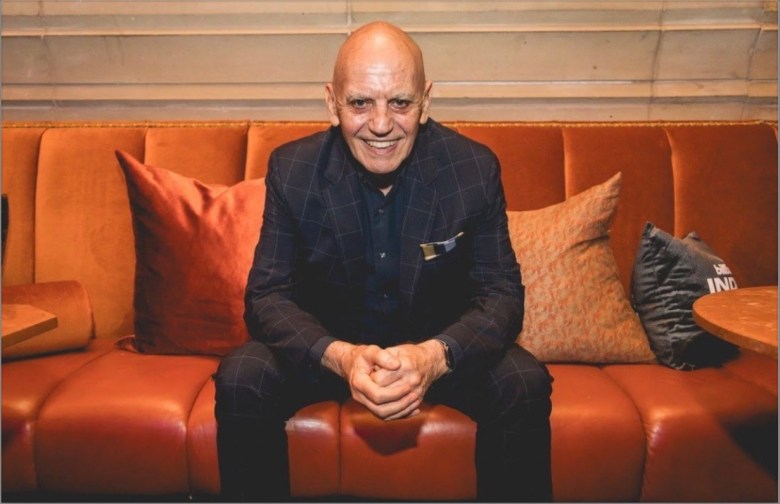

Eamonn Forde Meets… – each month, the veteran music business journalist speaks to a senior industry figure about the topics that really matter – and gets the opinions of the people who make the decisions that count.
May 2025: Richard Burgess, president and CEO of A2IM. Independent dependency: with a background in electronic music (he was a member of Landscape), music production, artist management, music technology and academia, Richard Burgess has a panoramic view of the industry and a deep understanding of how all the different constituent parts (should) work together. After a decade, he is leaving his role at A2IM, but knows the fight against major-led consolidation is something that will never truly dissipate for the indies.
He talks about the threat posed by the “unduly powerful majors”, how monopolies only ever flatten down culture, why AI is our “greatest invention” (but only if the music business looks back to Napster as a instruction manual in what not to do when faced with existential threats), and ultimately why the majors trying to buy up so many indies is prioritising short-term market share gains over their own long-term creative viability.

The American Association of Independent Music (A2IM) turns 20 this year, but its president and CEO for half of that time has announced his departure (expected to be early 2026). Treating our conversation like an exit interview, Richard Burgess discusses the two biggest issues that will define the independent sector in the coming years: major label consolidation; and the rise of AI.
The former, he believes, will be devastating if it is allowed to continue unchecked; the latter, he insists, can actually be a liberating force.
The music industry is in a permanent state of upheaval and there is an argument that inertia and calm lead to apathy, which is never a spur for creativity or innovation.
“If you look at my history overall, you can see that I embrace change,” he says. “I love change.”
“Change” at the record company level has been, in recent years, about accelerated consolidation through the acquisition of independents. In late 2024, Universal Music Group acquired the remaining 51% of PIAS, having acquired 49% in 2022. Soon after, UMG announced it was also going to acquire Downtown Music, but European indie trade body Impala insists it will lobby regulators to block the deal.
Unsurprisingly, Burgess is opposed to this consolidation on principle, arguing that it is bad for everyone and for everything – for the indies, for musicians, for culture and for the majors themselves.
“Everybody in the independent sector is deeply concerned about the latest acquisition of Downtown,” he says. “This is not to undermine Justin Kalifowitz who owns Downtown. We’re always happy when somebody builds something and walks away with a lot of money. That’s a great thing. That’s what most independents want to do. It’s just unfortunate that it went to Universal.”
“When you get one unduly powerful major, it distorts the playing field”
He says majors will pay lip service to protecting their acquisitions’ integrity, tossing around platitudes like cheap confetti, but the end result is always ruthless asset stripping.
“I had a band signed to PolyGram when there was allegedly a ‘merger’ between Universal and PolyGram [in 1998],” he says by way of example. “But honestly, it was a bloodbath. It was more like a hostile takeover from my observations. Labels were just shut down. They were dropping acts that had gold albums and more. It’s a survival of the fittest kind of world. The independent sector can support artists that are not the biggest sellers out there, that are not the most commercial.”
The economic arguments against rapid consolidation should, he feels, be self-evident. “One of the things that concerns us greatly about this kind of consolidation is that it gives unreal amounts of leverage,” he insists. “That’s the danger of having these unduly powerful majors. When you get one unduly powerful major, it distorts the playing field, it distorts the entire business environment.” That ultimately means the indies get the crumbs in licensing deals.
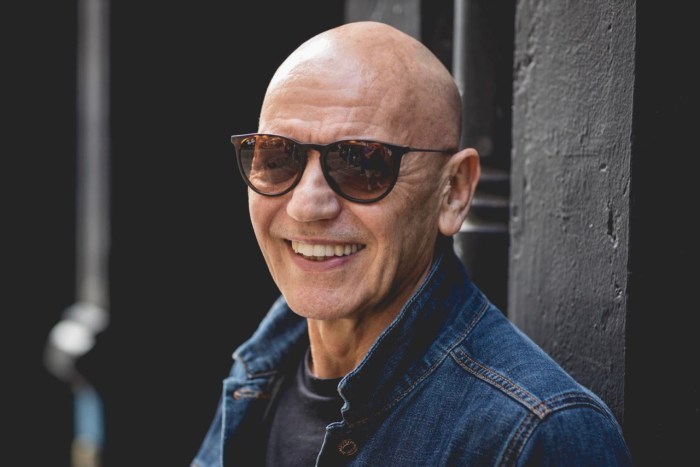
Pointing to every notable genre of the past 100+ years – jazz, blues, gospel, country, soul, R&B, rock ’n’ roll, disco, punk hip-hop, dance – Burgess notes their commonality is that they were all first spotted and nurtured by independent labels. To flatten down the market is, he feels, to flatten down culture.
“It’s a very barren world that eliminates the niches and the sub genres,” he says. “I don’t want to see that happen.”
It is, he accepts, incredibly difficult for indie labels, often leading a hand-to-mouth existence, to walk away if offered “an eye-watering amount of money by a major label”. He argues that such consolidation is only a short-term benefit to the labels and that, in buying up and gelding indies, they are planting bombs under their own future.
“The majors depend on the independents to perform a function that the majors can’t perform in the marketplace”
Richard Burgess
“I think it’s bad for the ecosystem, including the majors,” he says. “That’s because the majors depend on the independents to perform a function that the majors can’t perform in the marketplace – finding those new niche genres and finding those new niche bands and the things that are not in the mainstream, that don’t sound like what’s currently being successful.”
Negate the indies and you negate music’s future. “The world would be a poor place, and the major labels would be screwing themselves for the future, if the independent sector was not thriving.”
AI – the greatest invention
If consolidation has no upside for the independents or for culture, the other dominant development in the sector in 2025, in his mind, does.
“I personally love AI,” he says. “I think it’s the greatest invention, the greatest tool, that humanity has ever created. And I think it’s going to transform humanity in very positive ways.”
For many music copyright lawyers and artists, this is an opinion likely to suck the oxygen out of the room.
“Some of my best friends and most trusted advisors are lawyers,” he counters. “Believe me, you cannot live without lawyers in America. Not meaning to disparage lawyers, but it’s not the way my mind works. My mind is thinking, ‘This is amazing. How do we harness this? How do we use this? How do we make it valuable?’”
He is adamant that the snowballing of AI will be “much more significant than Napster” and that the industry, especially the majors, needs to look at everything it did wrong in response to Napster – namely trying to lash down digital with a misguided “containment strategy” – and not have history repeat itself here.
“The fact we didn’t deliver some kind of viable system for distributing music digitally meant that it was a wide open field and, inevitably, someone was going to jump into it,” he says of the vacuum Napster filled in 1999. “And they did. We have to ensure we don’t do the same with AI.”
Due to their market power and resources, he believes the majors could have built viable alternatives to Napster, although the dual disasters of MusicNet and Pressplay suggest their hearts, their abilities or their intellects were not in it.
“If it had been up to the indies, I think we would have dealt with the digital disruption,” he argues. “And it would not have been a disruption; it would have been a transition.” Such a progressive attitude, he feels, should also apply to AI, but with certain caveats. “Even though there are some parallels with 1999, it’s not the same,” he says of AI. “We’re definitely not going to be fighting the same war with the same weapons.”
“There’s not only monopoly – there’s monopsony, which is where you crush your suppliers”
Richard Burgess
Returning to the rolling threat to the indies of hyper-consolidation, he says the independent sector will fight hard to oppose this; but we need to accept they are doing so on a rigged playing field as the regulators are increasingly leaning on broken legislation.
“The antitrust law is on its head,” he proposes. “It’s upside down.”
He believes it is not just about the dead-eyed march towards market monopolies hoovering up everything in the music sector; there are the negative implications for balanced commercial negotiations as the powers of the DSPs themselves are increasingly consolidating.
“There’s not only monopoly – there’s monopsony, which is where you crush your suppliers,” he says. “And that’s really what we have going on here as much as anything.”
Musical innovation is in the DNA of the very best independents, just as an insatiable thirst for consolidation is the defining character of the majors. But if all the water is being sponged up, ultimately everything will suffer. Without the indies there to beat on, boats against the current, everyone will be borne back ceaselessly into the past.