


India insight – every month, music business journalist Amit Gurbaxani shares his expertise, insight, and analysis on key stories from the exciting, exploding market of India.
There are few things Indians will admit their north-western neighbours do better. Coke Studio is among these rare exceptions. The Indian version of the global music television series has produced a handful of enduring hits, but has never quite matched Coke Studio Pakistan in terms of musicality or mass popularity.
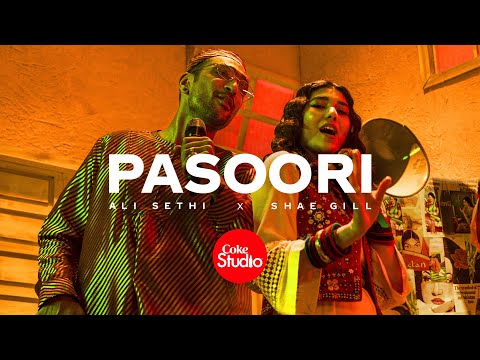
The biggest smash from season 14, Ali Sethi and Shae Gill’s impassioned, addictive break-up anthem “Pasoori” is among the top ten most streamed tracks on Spotify in India since it launched here in February 2019.
Though 2024’s season 15 hasn’t yet generated a phenomenon of such proportions, at least four singles from it – including the euphoric “Blockbuster” by Faris Shafi, Umair Butt and the Garvi Group – reached Spotify’s Daily Viral Songs chart for India.
For its first 13 seasons, Coke Studio Pakistan – which was launched in 2008 – was best known for its contemporary renditions of classic and traditional Pakistani tunes. After composer Zulfiqar ‘Xulfi’ Jabbar Khan and Giraffe, the production company he co-founded with Muhammad Ibrahim, took over the reins from 2022’s season 14, the focus has shifted to more original compositions, and the visuals have changed from a stage-like set-up to a music video format.

Xulfi told Music Ally he wanted to make the switch from covers because “there is so much original expression that exists in my country, so many stories to tell”. What’s remained common across seasons – which have been helmed by such Pakistani music industry veterans as Rohail Hyatt, the band Strings, and Ali Hamza of the group Noori with Zohaib Kazi – is that the majority of the songs are collaborations, often bringing together artists from diverse genres, different eras and varied backgrounds.
The same flavour and feeling
The widespread embrace of Coke Studio Pakistan in India is just one example of the love for Pakistani music in India. Several Pakistani acts appear on Spotify’s Top Artists chart for India.
A spokesperson for the service for MENA and South Asia excluding India, divides these musicians into three broad categories: the first, they say, comprises ‘legends’ such as qawwali king Nusrat Fateh Ali Khan and ghazal exponent Ghulam Ali; the second is made up of singers who’ve enjoyed “huge popularity” through their contributions to Bollywood soundtracks, the likes of Atif Aslam, Rahat Fateh Ali Khan, and Shafqat Amanat Ali; and the third of “more indie acts” from the genres of pop and rap, which includes rising stars, singer/songwriter Kaifi Khalil and R&B/hip-hop trio AUR, both of whom reached No.1 on Spotify in India in 2023 with the hits “Kahani Suno 2.0” and “Tu Hai Kahan” respectively.
On the charts at least, India and Pakistan’s admiration for each other’s sounds is undoubtedly mutual. Pakistan’s surveys are filled with Indian releases. There are multiple reasons why its output resonates so strongly in India and vice versa, the foremost of which is that the countries share a common culture, language and music rooted in what was the same nation until the Partition in 1947.
“When you listen to ‘Pasoori’, you can relate it to a lot of music [from] India,” says Alfonso Perez Soto, the president of emerging markets at Warner Music, which entered into a partnership with Coke Studio Pakistan producer Giraffe in January. “You get the same flavour and feeling.”
Critics and listeners have opined that Coke Studio Pakistan scores over its Indian counterpart because it has relatively fewer commercial constraints. “Bollywood has a certain blanket over the [Indian] industry, and we’ve seen how that reflects in music [being made outside of it too],” says Xulfi whose band Call contributed to a couple of Hindi movie soundtracks in the 2000s. He believes that Pakistani songs appeal so strongly to Indians because “it’s your music coming back to you in a [more] unadulterated way.”
“Maybe it provided Indian audiences with artist-led music”
The spokesperson for Spotify, which has been the ‘official audio streaming partner’ for Coke Studio Pakistan since 2022, echoes this sentiment. “There’s a theory that, free of the pressures of delivering to Bollywood, [there’s] a lot more experimentation in franchises like Coke Studio Pakistan and that maybe it provided Indian audiences with artist-led music, which was [somewhat] missing over the last 15 years”. Ironically, a Bollywood version of “Pasoori” for the 2023 Hindi film Satyaprem Ki Katha has tallied only a fraction of the original’s streams.
The success of Coke Studio Pakistan led to the launch of other brand-led endeavours such as Nescafe Basement (2012), which is also helmed by Xulfi, and Velo Sound Station (2020). However, none of them has replicated the international crossovers of Coke Studio Pakistan, which Xulfi sees as one of his country’s most significant exports. “For me, the show has become a bridge for Pakistan to have a conversation with the rest of the world.” Despite diplomatic tensions, that conversation with India has never stopped between music fans.
DATA:
Most streamed Pakistani artists on Spotify in India
- Atif Aslam
- Rahat Fateh Ali Khan
- Shafqat Amanat Ali
- Nusrat Fateh Ali Khan
- Talha Anjum
- Umair
- Ali Sethi
- Mustafa Zahid
- AUR
- Kaifi Khalil
Most streamed tracks by Pakistani acts on Spotify in India (excluding songs from Bollywood soundtracks)
- “Pasoori”, Ali Sethi and Shae Gill
- “Kahani Suno 2.0”, Kaifi Khalil
- “Tu Hai Kahan”, AUR
- “Jo Tu Na Mila”, Asim Azhar
- “Iraaday”, Abdul Hannan and Rovalio
- “Bikhra”, Abdul Hannan and Rovalio
- “Baari”, Bilal Saeed and Momina Mustehsan
- “Downers At Dusk”, Talha Anjum, Umair
- “Mere Humsafar” (from Mere Humsafar), Yashal Shahid
- “Ghalat Fehmi” (from Superstar), Asim Azhar and Zenab Fatimah Sultan Based on plays from February 2021, when Spotify launched in Pakistan, to August 2024

